How Photo Book Manufacturers Work and What To Look For
A photo book manufacturer designs, prints, binds, and finishes bound photo albums, selling either directly to consumers or as a white-label service for retailers and studios. Providers like Mixbook offer hundreds of themes plus blank-book options, while production methods vary widely: print-on-demand runs from a single copy, whereas offset printing typically requires 100+ units for lower per-unit cost. The two factors that matter most are binding durability and color accuracy, since both cost more to fix later than any design change.
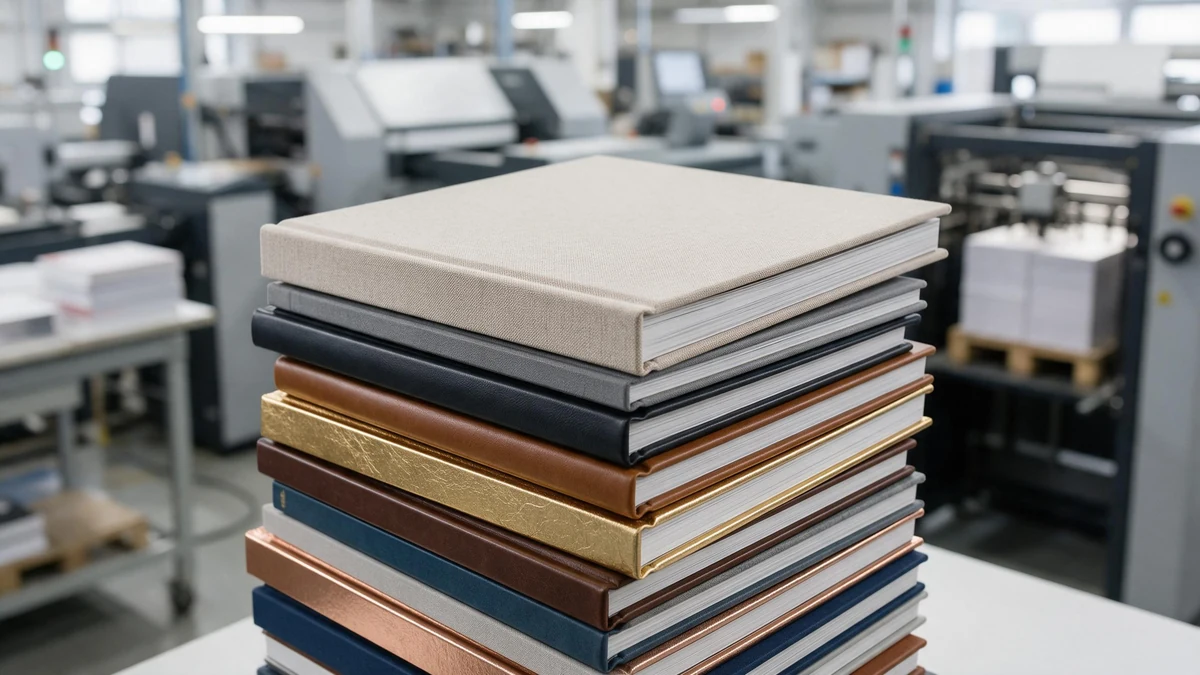
hoto book manufacturers turn image files into bound, finished albums — judged most on binding durability and color accuracy.
Which paper, binding, and cover choices genuinely matter here? How do you carefully check a supplier on price, minimum order sizes, and quality? LeadWorks generally recommends judging any photo book manufacturer on how long the binding holds up and how accurate the color is, because those two flaws end up costing more to fix than any design change you might make.
Quick Takeaways
- Choose manufacturers based on binding durability and color accuracy above design.
- Request a physical proof since screen color rarely matches printed ink.
- Lay-flat binding prevents center-gutter photo splits but raises per-book cost.
- Print-on-demand suits single copies; offset needs 100+ for cheaper units.
- Verify suppliers on price, minimum order size, and quality control standards.
What Does a Photo Book Manufacturer Actually Do?
A photo book manufacturer takes your image files and turns them into finished, bound books across six production stages: prepress, printing, binding, finishing, quality control, and fulfillment. Actual manufacturers keep all of these steps under their own roof and produce in large batches for photographers and brands, which is different from consumer apps that print one book at a time and hand off the physical work to somebody else. That difference is what decides your cost per book, your color accuracy, and how fast you can reorder.
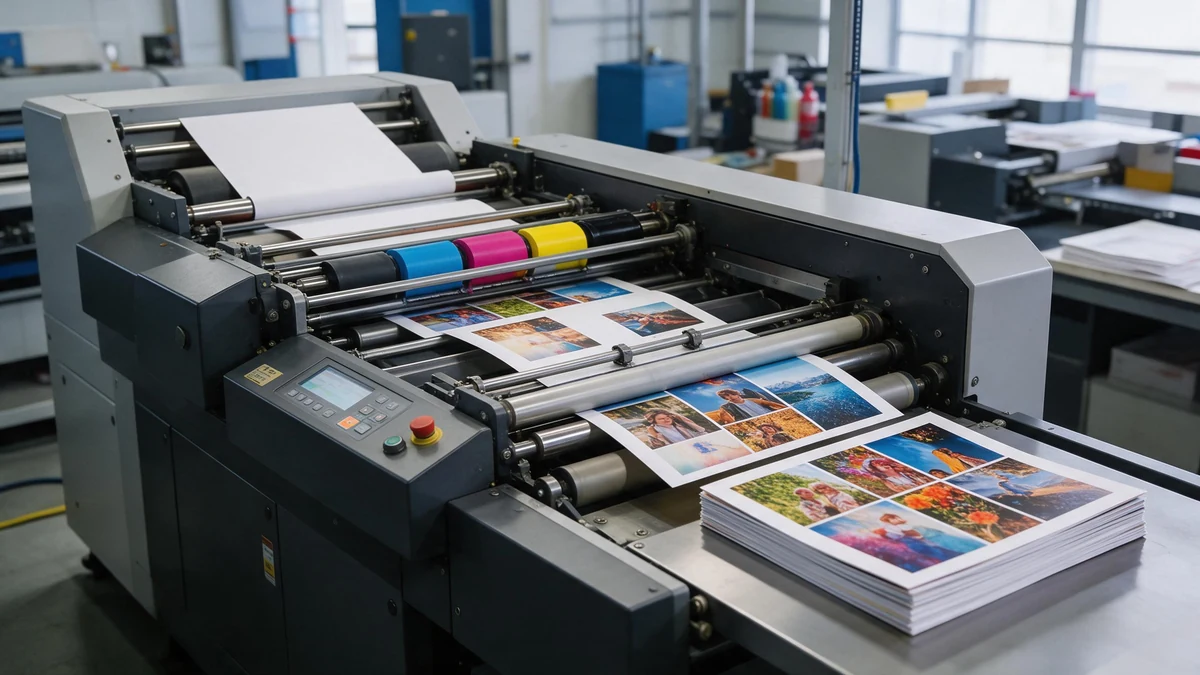
Prepress, printing, binding, finishing, QC, and fulfillment — six stages under one roof.
What happens at each production stage?
Prepress is essentially where files get cleaned up before any ink touches the paper. The technicians check resolution, aiming for at least 300 DPI so prints come out sharp, and they convert the RGB screen colors into CMYK ink values. They also add bleed margins, which are extra edges so the trimmed pages show no white gaps. Skip that work and your blues will shift toward purple.
Printing then goes down two roads. Print-on-demand, which means printing single copies as needed, handles one book at a time, while offset printing runs hundreds of identical books at a lower price per book. Binding joins the pages together, whether that means layflat panels or perfect-bound spines, and finishing adds the touches that buyers actually notice, like matte lamination, foil stamping, or edge printing along the block of pages. LeadWorks builds its edge printing as an in-house special process, and that keeps the alignment tight across a whole run.
How do true manufacturers differ from consumer apps?
Consumer platforms sell straight to the end user. Blurb, for one example, offers both volume printing and print-on-demand along with fulfillment in 2026, so it runs a mixed model. A dedicated photo book manufacturer goes further than that. They offer white-label production, meaning your brand sits on the cover and none of theirs shows up, plus bulk minimum order quantities and per-piece pricing built for resellers.
Fulfillment closes the whole loop. Once the final quality check catches any misaligned trims or color drift, the manufacturer packs, labels, and ships the books, often blind-drop straight to your customer with your return address on it. That last step is really why brands treat a manufacturer as a partner rather than just a vendor.
How Do Photo Book Printing Methods Differ and When Should You Use Each?
Offset printing usually beats digital on unit cost once you pass roughly 300,500 copies, while digital on-demand wins for small runs and variable data. The break-even shifts with page count and trim size, so a 100-page 8×8″ book flips to offset later than a thin 20-page one. Match the method to your run length first, then to color needs.
What are the real cost thresholds for offset vs digital?
Offset spreads a fixed setup cost across the whole run. Plates, makeready, and press calibration can run several hundred dollars before a single good sheet prints. At 50 copies that overhead is brutal per unit; at 1,000 copies it nearly vanishes, which is why offset drops below digital somewhere in the 300,500 range for most photo books. Digital, or print-on-demand, has near-zero setup, so it stays cheap at low volume and lets each copy carry different photos or names. Blurb, for example, offers both volume printing and print-on-demand in 2026 for exactly this reason.
How do ink types affect skin tones in photography books?
Ink chemistry decides color depth. Dry toner (fused plastic powder) can look slightly flat on skin. HP Indigo uses liquid electrophotographic ink with tiny pigment particles, giving smoother gradients and a wider gamut close to offset. Offset itself lays wet ink film for the deepest blacks.
| Method | Ink type | Best run size | Skin-tone quality |
|---|---|---|---|
| Offset | Wet CMYK film | 500+ | Highest, deep blacks |
| HP Indigo | Liquid ElectroInk | 1–500 | Near-offset, smooth |
| Dry toner | Fused powder | 1–200 | Good, can flatten |
LeadWorks recommends Indigo or offset for professional portrait and wedding books where accurate faces matter most. For a mixed order, ask your photo book manufacturer which press handles your file profile before proofing.
Layflat vs Perfect Binding — Which Binding Is Right for Your Photo Book?
Choose layflat binding when your images stretch across the full width of both pages, like wedding panoramas, because the pages open completely flat and nothing gets lost in the gutter, which is the crease that runs down the spine. Choose perfect binding for softcover projects, tighter budgets, and large print runs where a single image spanning two pages isn’t part of the plan. Keep in mind that layflat can add roughly 30 to approximately 50% to the cost of each book and can nearly double how much each page weighs.
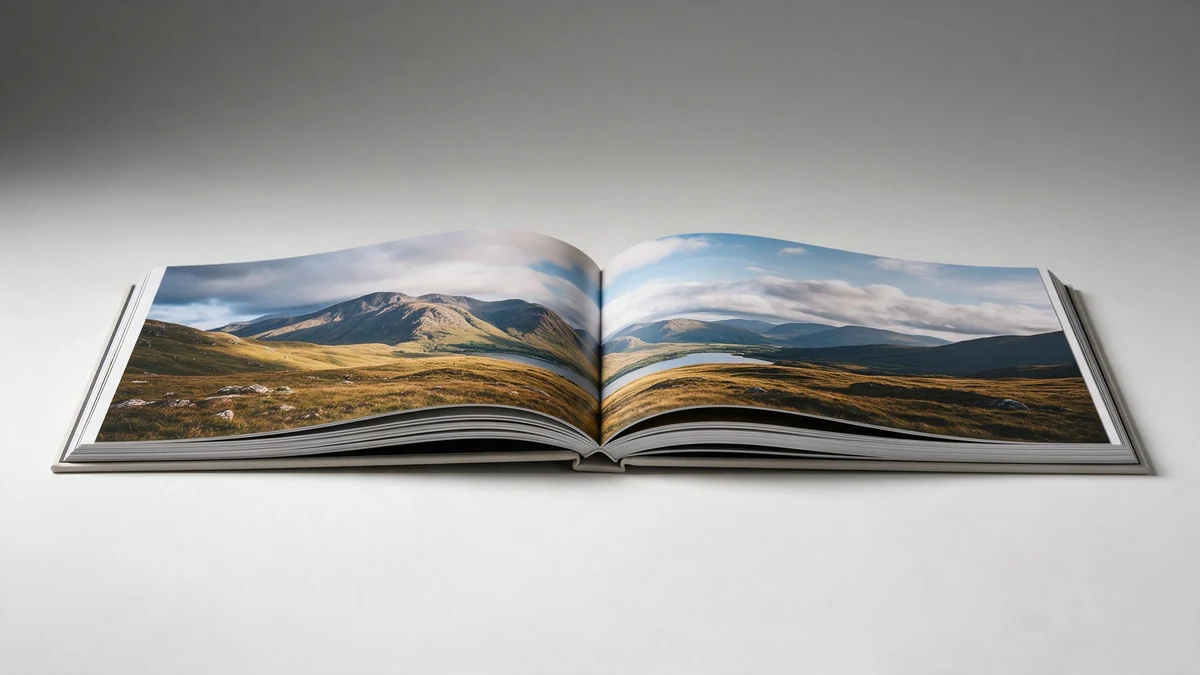
Layflat pages open a full 180 degrees so a panorama crosses the seam without a gutter break.
The so-called gutter problem is really why photographers argue about this choice. With perfect binding and case binding, the pages are glued down into a spine, so the middle of a two-page spread curves inward and a groom’s face that happens to sit in that fold gets swallowed up. True layflat books use thick, hinged pages that are bonded back-to-back, which lets a single photo cross the seam with no break at all, and that is exactly why coffee table books and premium albums almost always call for it.
What are the four main binding types?
They fall into two glued families and two sewn families, and each one lands at a different point for price and how long the book holds up.
- True layflat: the pages open a full 180 degrees so panoramic spreads stay whole, though it is the heaviest and most expensive option, which makes it ideal for weddings.
- Perfect binding: the pages are glued to a wraparound cover, making it the cheapest choice for softcover work and the best fit for on-demand orders of 50 pages or more.
- Case binding: folded sections of pages are sewn or glued into a stiff hardcover, which is durable but still leaves that inward curve at the gutter.
- Singer-sewn: a thread stitch runs visibly through the spine, giving a strong and craft-forward look that shows up often in art titles.
When does layflat justify the added cost?
Layflat earns its keep when the whole design leans on unbroken spreads. For a single wedding album that a client will hold onto for decades, that 30 to approximately 50% premium is easy to justify. For a 500-unit corporate giveaway made up mostly of single-page photos, perfect binding brings the cost down and cuts the shipping weight quite a bit. Publishers still rely on traditional sewn case binding when they want the book to last.
A capable Photo Book Manufacturer like LeadWorks keeps the binding work in-house, so the hinge alignment and the edge printing stay consistent, and that is the difference between a spread that reads as one continuous image and one that visibly jumps at the seam.
How Do You Vet a Photo Book Manufacturer on MOQs, Lead Times, and White-Label Capability?
When you’re checking out a photo book manufacturer, start with three numbers before anything else: the minimum order quantity (MOQ), how long it takes to go from a sample to a full bulk run, and whether they’ll quietly leave their own branding on your product. Suppliers who print on demand will happily accept a single copy, while offset factories usually want you to commit to 300,500 units for each title. Some vendors, like one major print-on-demand provider, actually run both large-volume printing and single-copy fulfillment in 2026, so the smart move is to match the model to the order size you really have.
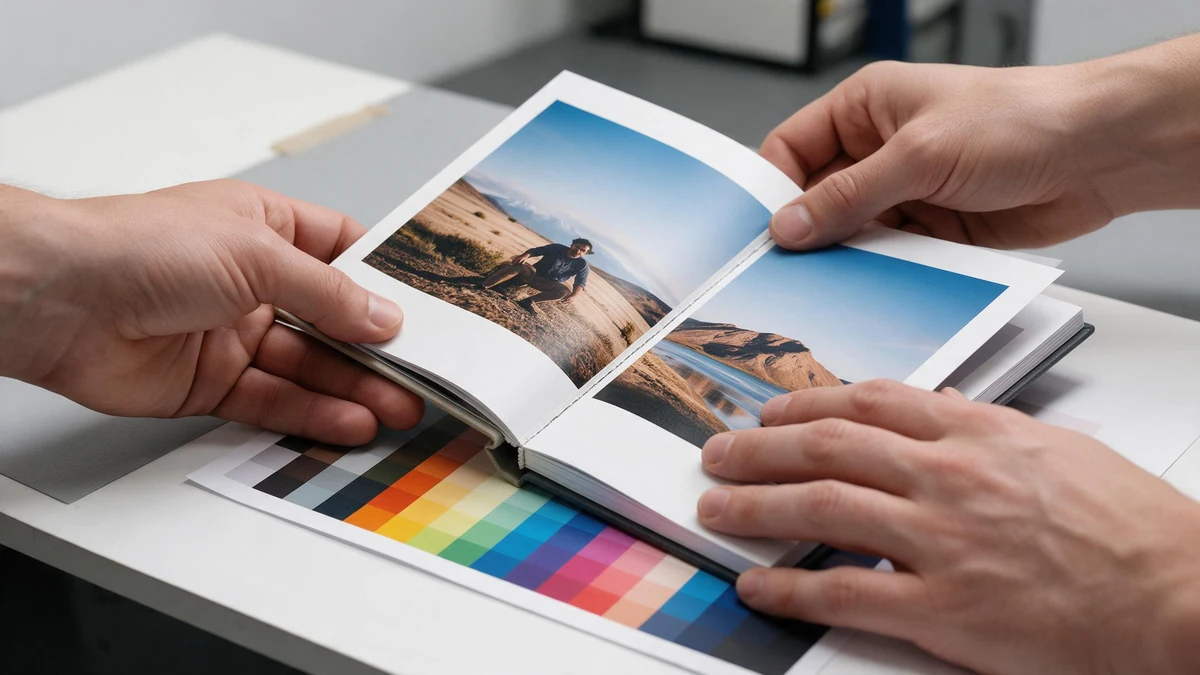
A physical proof catches color drift and binding gaps a screen never will — before the full run.
What MOQ and lead times should you expect by print method?
The MOQ follows directly from the print method you pick. Digital printing and print-on-demand let you order just 1 book, whereas offset needs a full batch to make the plate setup worth doing. And the lead times basically split into two separate clocks, one for getting a physical sample made, and another for the bulk run itself.
| Print method | Typical MOQ | Sampling | Bulk production |
|---|---|---|---|
| Print-on-demand | 1 copy | 3–5 days | 5–10 days |
| Digital batch | 25–50 copies | 5–7 days | 7–12 days |
| Offset | 300–500 copies | 7–14 days | 15–25 days |
Remember to add freight to any bulk quote you get. Sea freight coming from Asia generally takes 25,40 days, while air freight arrives in 5,8 days but ends up costing several times more per kilogram.
What does white-label and OEM support actually mean?
White-label essentially means the factory ships the books carrying your logo, and never theirs, across the packaging, the invoice, and any inserts tucked inside. Drop-ship is when each order goes straight to your customer. OEM (original equipment manufacturer) takes things a step further, because the supplier builds to your own custom specification rather than pulling from a stock template.
- Confidentiality clause: a signed NDA that stops the factory from reselling your design or naming you as one of their clients.
- Blind drop-ship: absolutely no supplier branding shows up on the parcel or the slip.
- Custom spec support: this covers your own trim size, paper, and finishes, and LeadWorks, for instance, offers in-house edge printing as an OEM special process.
Make sure to ask for all of these in writing before you send over any files. A vague verbal “yes” on confidentiality really protects nothing at all.
How Do You Assess Quality Control and Judge a Sample Photo Book?
Assess quality control by requesting a paid pre-production sample built from your own files, then inspecting five defects: color drift, mis-registration, gutter creep, binding gaps, and edge-print alignment. A generic stock sample only shows a factory’s best case. A pre-production proof shows how your specific images, paper, and binding behave, the only test that predicts your real print run.
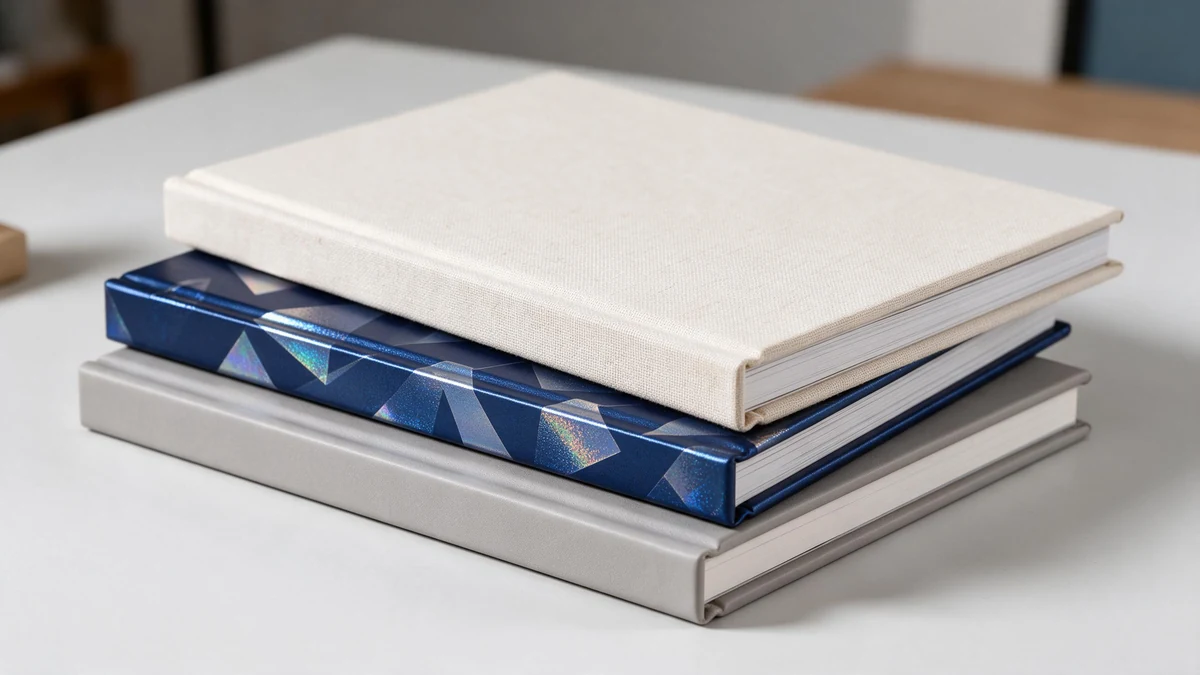
Hardcover, linen, foil stamping, or matte laminate — the cover and finish options buyers notice.
What defects should you check on a physical proof?
Check five things, in order of how often they ruin a run:
- Color drift: skin tones or brand colors shifting between pages. Pros compare against a printed color proof, not a screen. Ask if the manufacturer prints to a calibrated ICC profile — the color map that keeps every press hitting the same target.
- Mis-registration: the four ink layers (cyan, magenta, yellow, black) landing out of line, leaving fuzzy edges or color halos. Tolerance on quality presses runs under 0.1mm.
- Gutter creep: images near the spine getting swallowed by the binding. Test it with a face or text placed 5mm from the center fold.
- Binding gaps: pages pulling loose at the spine after 20 open-close cycles.
- Edge-print alignment: on printed page edges, artwork must sit flush with no white slivers.
Why does in-house process control matter more than outsourced steps?
In-house control means fewer handoffs where defects hide. When a photo book manufacturer outsources binding or edge printing, each transfer adds a point where color and alignment can slip, and blame gets murky. LeadWorks runs process control and specialty steps like edge printing in-house, serving 300+ global publishers and brands, which lets a single team catch drift before it reaches your box.
A paid sample costs approximately $30,$150 and often applies as credit against your order. Skip it, and a 2,000-unit run of hidden gutter creep costs far more. Spend the money.
What Are the Most Common Mistakes When Sourcing Custom Photo Books in Bulk?
The single most expensive mistake in bulk photo book sourcing is approving a digital proof without a physical sample. A screen shows RGB color at full brightness; offset presses print CMYK ink on paper, which reflects light. That gap means skin tones can shift warm or dark on the printed page even when the PDF looks perfect. Fix it: always sign off on a physical proof before the full run.
Why does color shift between screen and press trip up so many orders?
Because monitors and paper live in different color worlds. A backlit display can show colors that ink physically can’t reproduce, this is the gamut limit. Blurb, a print-on-demand and volume book service, publishes ICC profile downloads so files can be soft-proofed before submission (Blurb, 2026). The fix is simple: ask your manufacturer for their ICC profile (a file that maps colors to their exact press and paper) and embed it. Skip this and you gamble every unit.
What binding and paper mistakes cost the most?
Two mistakes stand out. First, ignoring page-count binding limits: perfect binding needs enough spine thickness to hold glue, and most presses cap it near 300 pages, exceed that and pages fall out. Second, choosing glossy stock for text-heavy layflat spreads, because glossy reflects overhead light and creates glare on paragraphs; matte or silk paper reads better.
- Bleed specs: extend images 3mm past the trim edge so cutting leaves no white slivers.
- Sample-first rule: a paid pre-production sample costs far less than reprinting 1,000 flawed books.
LeadWorks recommends locking ICC profiles, bleed, and binding limits into a written spec sheet before any purchase order. That one document prevents most reprints.
How Do You Choose a Manufacturer for Different Order Sizes and Use Cases?
Match the supplier to your order size. For a single wedding album, a consumer platform costs approximately $80,$250 per book with no minimum. For 50,500 photographer reseller runs, a white-label printer drops unit cost by using digital presses. For 500+ branded books, an OEM manufacturer beats every consumer platform on price and customization. Volume decides the answer more than anything else.
When does a consumer platform beat an OEM manufacturer?
Use a consumer platform for one book or a handful. Blurb offers both print-on-demand and volume printing plus fulfillment in 2026 (Blurb), which suits one-off gifts and test copies. These sites give you templates and instant pricing, but they cap sizes to a fixed menu, Blurb lists six sizes in 2026, and lock cover materials. You can’t request a 9×9 trim, foil-stamped logo, or specialty edge printing.
When should photographers and brands switch to OEM?
Switch to a photo book manufacturer once you need custom trims, personalized text on every copy, or your own branding inside the book. OEM (Original Equipment Manufacturer, a factory that builds to your spec, not theirs) unlocks true custom sizes, spot UV, and gilded edges. The trade-off is a minimum order and a longer setup.
| Use case | Order size | Cost per unit | Customization | Turnaround |
|---|---|---|---|---|
| Single wedding album | 1 | $80–$250 | Fixed templates | 5–10 days |
| Photographer resale run | 50–500 | $18–$45 | White-label, set sizes | 2–3 weeks |
| Wholesale brand order | 500+ | $6–$15 | Full custom, OEM | 4–6 weeks |
LeadWorks fits the wholesale tier, where in-house edge printing and special finishes matter more than instant checkout. For brand orders above 500 copies, that process control keeps every unit’s foil and trim identical, the exact consistency consumer platforms can’t promise.
Frequently Asked Questions About Photo Book Manufacturers
Most bulk photo book manufacturers set a minimum order quantity (MOQ) between 100 and 500 units for custom-spec runs, offer custom trim sizes above roughly 300 books, and quote 15,30 day lead times before shipping. Layflat binding adds 30,60% to the per-unit price over perfect binding, and many factories drop-ship for resellers under a white-label arrangement.
What’s the typical minimum order quantity for a custom photo book?
Bulk factories usually start at 100,500 units for a fully custom photo book with your own trim size, paper, and cover material. Below that, you pay print-on-demand rates. Consumer platforms offer single-copy printing, Blurb, for example, lists photo books in six sizes with three cover types in 2026, with no minimum at all.
Can I get a custom size, and how do I add text?
Yes. Trim sizes outside standard 8×8″ or 12×12″ typically require a run above 300 books, since the factory must cut new dies. To add text to a custom photo book, you supply it inside a print-ready PDF where fonts are embedded and text sits at least 6mm from the trim edge, never in the manufacturer’s editor for bulk jobs, where a bad export corrupts every copy.
Do manufacturers drop-ship for resellers?
Many do, under white-label fulfillment. The factory prints, packs in your unbranded box, and ships direct to your customer.
| Question | Typical answer (2026) |
|---|---|
| Custom-spec MOQ | 100–500 units |
| Custom trim size threshold | Above ~300 books |
| Layflat price premium | +30–60% vs perfect binding |
| Standard lead time | 15–30 days |
| Drop-shipping | Available white-label |
LeadWorks handles white-label runs with in-house edge printing, so resellers can ship a branded product without owning a press. Confirm your file spec before quoting, that one step prevents most reprints.