How Long Does Book Printing Take?
A standard book printing timeline runs 2 to 6 weeks from approved files to boxed delivery. Digital short runs under 500 copies can ship in just 3 to 5 business days, while offset printing adds 1 to 2 weeks for plates, drying, and bindery setup. Large offset hardcover jobs often stretch past 8 weeks, since hardcover binding adds 5 to 10 days versus paperback. Most missed deadlines trace back to file errors and proofing delays, not the press itself.
Which factors add days or cut them down? And how do digital and offset timelines really differ from one another? What counts as a realistic limit for a rush order? And how do you avoid the kinds of delays that end up wrecking a launch date?
In LeadWorks’ view, most of the deadlines that get missed trace back to file preparation and proofing rather than the press itself.
Quick Takeaways
- Standard book printing runs 2–6 weeks from approved files to delivery.
- Digital short runs under 500 copies ship in 3–5 business days.
- Offset printing adds 1–2 weeks for plates, drying, and bindery.
- Hardcover binding takes 5–10 days longer than paperback.
- Fix file errors and proofs early to avoid most missed deadlines.
How Long Does It Take to Print a Book?
Book printing takes 3-7 business days when you go digital or print-on-demand (POD), and 2-5 weeks for offset printing, with another 1-3 weeks piled on top for proofing and shipping. So the honest total, going from print-ready files to a finished copy sitting in your hands, actually runs anywhere from two weeks to nearly two months, depending on your method and how many pages you have.
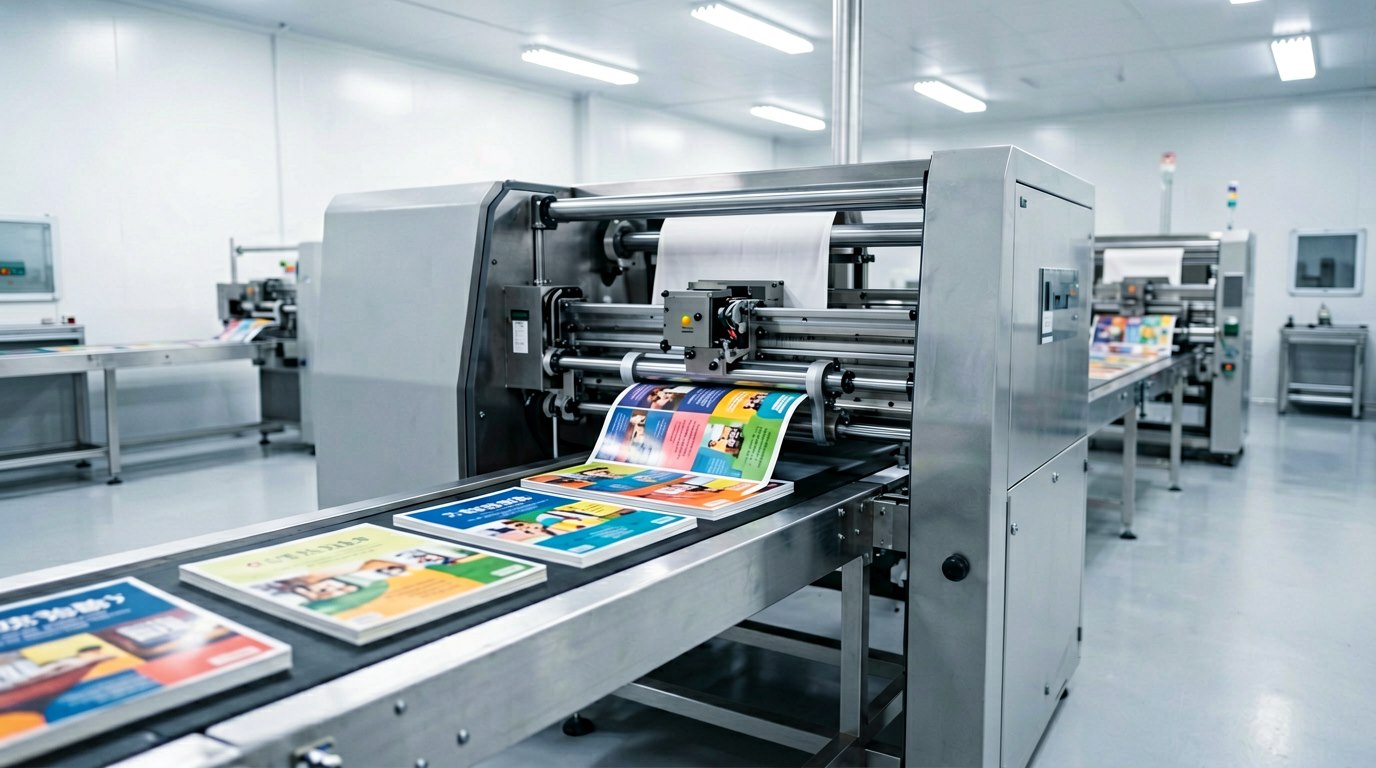
That range trips up a lot of first-time authors, because the printing part itself is quick. The waiting comes from everything wrapped around it. A softcover digital run can finish in 5 to 10 business days after proof approval, while a typical offset job takes 3 to 6 weeks, and sometimes even longer when the binding work gets complicated.
It helps to think of the full book printing timeline as three linked phases rather than one single number:
- Proofing: 3-10 business days. You review a digital proof or a physical “wet proof,” which is basically a real printed sample, and you sign off before the run starts.
- Production: 3-7 days for POD or digital, and 2-5 weeks for offset. This is the actual time on the press plus the binding.
- Shipping: 2-14 days. Ground freight for a whole print run moves slower than a single courier parcel would.
The catch is that most delays almost never come from the press. They come from files that fail preflight, which is the automated check for missing fonts, low-resolution images, or wrong bleed margins. One rejected file resets your whole clock. LeadWorks handles preflight and binding in-house instead of outsourcing it, and that removes a common hand-off gap where files just sit in a queue between different vendors.
Beyond the printing itself, traditional publishing completely dwarfs these numbers. Self-published authors should plan for a 12 to 20 week schedule in 2026, going from a polished manuscript to finished copies. Printing is really just one slice of that. Editing, cover design, and proof cycles end up eating the rest.
You can skip the guesswork by matching your method to your deadline first, and then working backward from there. A gift book due in three weeks means you go with POD. A 5,000-copy launch means offset needs to be started two months out.
What Are the Stages in the Book Printing Timeline?
The book printing timeline breaks into five stages: file prep (2-5 days), proof approval (5-10 days), printing (3-15 days), binding and finishing (3-7 days), and shipping (3-21 days). Added together, most projects land between 12 and 20 weeks from polished manuscript to finished copies, according to PublishingXpress. Map each stage to your own calendar and you avoid nasty surprises before a launch date.
What happens during file prep and proof approval?
File prep and preflight take 2-5 days. Preflight means the printer scans your PDF for errors that break on press: fonts that were never embedded, images below 300 DPI, missing bleed (the 3mm of extra art that runs past the trim line so no white edges show). A printer won’t proceed until these clear.
Proof approval runs 5-10 business days, and it’s where most authors lose time. You review either a digital PDF proof or a physical printed sample; a physical proof adds shipping days but catches color shifts a screen hides. LeadWorks recommends budgeting for one full proof round even on a rush job, since skipping it is the most common cause of a costly reprint.
How long do printing, binding, and shipping take?
Printing itself is fast for digital and slower for offset. A standard softcover digital run often finishes in 5 to 10 business days after proof approval, while offset presses need more setup time. Binding and finishing then add 3-7 days.
| Stage | Day range | What actually happens |
|---|---|---|
| File prep & preflight | 2-5 days | Font embedding, DPI check, bleed fix |
| Proof approval | 5-10 days | Digital or physical proof review |
| Printing | 3-15 days | Press run, ink cure time |
| Binding & finishing | 3-7 days | Perfect binding, lamination, special edges |
| Shipping | 3-21 days | Domestic ground vs overseas sea freight |
Shipping swings the widest: domestic ground runs 3-5 days, while ocean freight from an overseas plant can stretch to 21 days or more. Special finishing, such as the edge printing LeadWorks handles in-house, sits inside the binding stage and rarely adds full days when the printer controls the process end to end.
How Does Print Method Change Turnaround Time — Digital vs Offset vs POD?
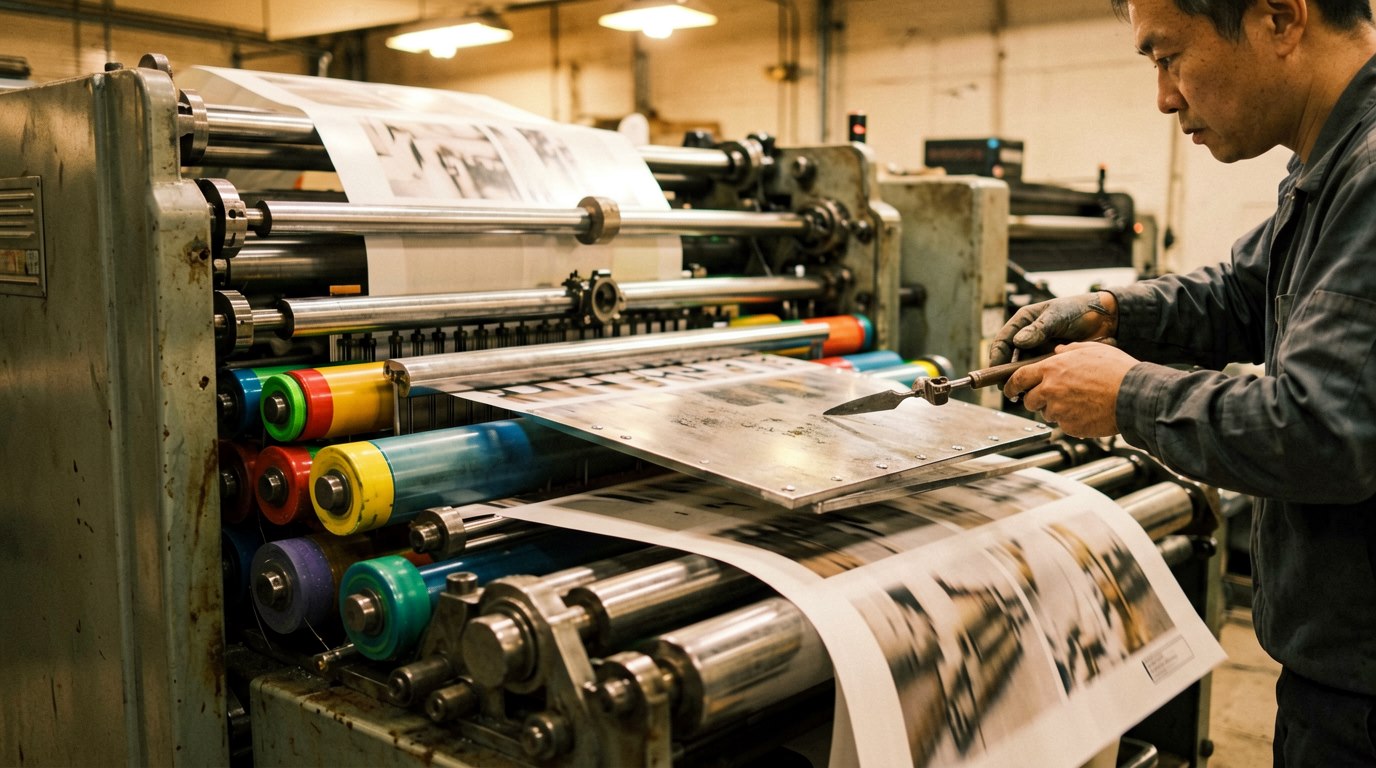
The printing method you choose is the single biggest factor shaping your book printing timeline. Digital runs wrap up in 5 to 10 business days after proof approval, while offset printing usually takes anywhere from 3 to 6 weeks. Print-on-demand, often shortened to POD, skips holding any stock at all and instead prints each book one copy at a time as it is needed. Go with digital when you want speed and need fewer than 500 copies, choose offset when you need large volume, and lean on POD if you want to avoid the risk of storing unsold books.
The difference really comes down to setup. Offset presses need physical printing plates, meaning one metal or polyester plate for each color and each page section. Creating and mounting those plates, a step known as “make-ready,” adds another 3 to 7 days before even a single sheet gets printed. Digital presses, on the other hand, print straight from your PDF file, so there are no plates, no make-ready step, and no waiting.
| Method | Setup time | Per-unit speed | Minimum quantity | Total turnaround |
|---|---|---|---|---|
| Digital | None (prints from file) | Slower per sheet | 1 copy | 5–10 business days |
| Offset | 3–7 days (plate make-ready) | Fastest at scale | 500–1,000 copies | 3–6 weeks |
| POD | None (on-demand file) | Slowest per book | 1 copy | 2–5 days per order |
When does offset actually beat digital on total time?
Offset pulls ahead on speed for each individual copy once you pass the 1,000 copy mark, because a high-speed offset press can run through thousands of sheets every hour. That sheer volume of pages per hour more than makes up for the time lost setting up the plates. So for a large trade run of 5,000 copies, offset finishes the printing stage faster than digital would, even after giving up a full week to the make-ready process.
Why does POD trade per-book speed for zero inventory wait?
POD only prints a book when someone actually places an order, so you never wait for a warehouse to fill up or empty out, and that basically removes the lead time tied to holding inventory. The trade-off is that each book prints one at a time, which makes filling large orders slow and keeps the cost of each book fairly high. POD works well for low-volume titles and older backlist books that sell slowly over time, though it is not the right fit for the big bulk orders you need during a launch week.
LeadWorks suggests matching your printing method to your run size before you lock in a schedule. For runs above 2,000 copies that include special finishes, such as edge printing, offset combined with an in-house bindery keeps both the quality and the book printing timeline under one roof, which cuts down on the delays that happen when work gets handed off between separate vendors.
How Much Does Quantity Affect Book Production Lead Time?
Quantity affects your book printing timeline in a way that isn’t proportional. A digital run of 50 to 500 copies stays inside 5 to 10 business days after proof approval, while offset runs of 2,000 or 10,000 copies take 3 to 6 weeks. But here is the interesting part: more copies often print faster per book, because offset presses only reach their real speed when they’re running at scale.
Why do 50 copies and 500 copies take almost the same time?
On a digital press, 50 copies and 500 copies come out within a day or two of each other. Digital printing has almost no setup at all, no plates, and no makeready, which is the set of trial sheets used to line up color and registration. The machine just prints, and then it stops. Doubling the count adds a few more machine hours rather than whole calendar weeks, and that is really why short-run authors rarely see the quantity change their delivery date.
Why do more copies speed up offset per-book pacing?
Offset presses need a lot of preparation up front. Burning the plates, mixing the ink, and running makeready can eat up 2 to 4 hours before a single good sheet ever comes off the press. If you print 300 copies, that setup dominates the whole schedule; but if you print 10,000, the same setup spreads across thousands of impressions, so each individual book costs less time to produce. A press running 12,000 sheets per hour turns a 10,000-copy run into a matter of hours once it actually starts rolling.
| Run size | Best method | Typical production window | Main time driver |
|---|---|---|---|
| 50 copies | Digital / POD | 3–7 business days | File check + trim |
| 500 copies | Digital | 5–10 business days | Machine run time |
| 2,000 copies | Offset | 3–4 weeks | Plate setup + bindery |
| 10,000 copies | Offset | 4–6 weeks | Bindery + drying + QC |
Can a 3,000-copy offset run finish near a 300-copy digital run?
Yes, though for opposite reasons. A 300-copy digital run finishes in about 8 days because there is no setup to slow it down. A 3,000-copy offset run can wrap up in roughly 3 weeks, but its per-book speed is far higher once the press gets going. LeadWorks plans these two paths quite differently: digital wins on lead time when you need low counts, while offset wins on unit economics and quality above 1,000 copies. It generally works better to pick your run size before you pick your method, rather than the other way around.
What Slows Down Book Printing and How Do You Avoid It?
Most book printing delays come from five sources: failed preflight files, extra proof rounds, the fall holiday rush, paper stock shortages, and customs holds. During Q4, printers see the heaviest load of the year, so a smart rule is to add approximately 30% to any quoted book printing timeline between September and December. A job quoted at 3 weeks becomes a 4-week plan.
The single most common delay never leaves your desk. Failed preflight, the automated check a printer runs on your files, bounces jobs back for missing bleed, low-resolution images, or unembedded fonts. A printer’s preflight software flags an image under 300 DPI (dots per inch, the sharpness measure) or a page missing the standard 0.125-inch bleed, and your slot in the queue resets. That alone can cost 2 to 4 business days, so fix these before you upload.
How do proof rounds and file errors add days?
Every extra proof round adds 3 to 7 days. A standard softcover digital run can finish in 5 to 10 business days after proof approval, but that clock only starts once you sign off. Reviewers who catch a typo on round three push the whole schedule back. Approve one physical proof, not three digital guesses.
- Preflight failure: resets your production slot; resolution and bleed errors are the top two triggers.
- Multiple proofs: each round adds 3-7 days plus shipping time for a hard-copy proof.
- Paper shortages: uncoated and specialty stocks can carry 2-6 week lead times when mills run tight.
- Customs holds: overseas shipments face inspection delays of 5-14 days at ports of entry.
Why does Q4 and overseas shipping wreck deadlines?
Q4 stacks two problems at once: peak press demand and slower freight. Holiday retail orders flood presses, and ocean shipping from overseas plants adds transit plus customs risk. LeadWorks recommends locking Q4 print slots by early September and choosing in-house process control to skip the extra handoffs that cause overseas customs holds. For special finishes like edge printing, build in an extra week, decorated edges pass through a separate station.
How Do You Build a Realistic Book Production Schedule?
Build your schedule by working backward from your sale date. Subtract shipping, then binding and printing, then proofing, and the number you land on is your file-ready deadline. For most self-published authors in 2026, the full run from polished manuscript to finished copies takes 12 to 20 weeks. Start there, then adjust.
What Does a Backward-Planning Template Look Like?
Pick your launch date first; everything else flows from it. Here is a working template for an offset softcover shipped by sea freight:
| Step (counting back) | Time needed | Deadline before launch |
|---|---|---|
| Launch / sale date | — | Day 0 |
| Ocean shipping + customs | 4-6 weeks | Week 6 before |
| Printing + binding | 3-6 weeks | Week 12 before |
| Proof approval | 1-2 weeks | Week 14 before |
| File prep + preflight | 3-5 days | Week 15 before |
Your file-ready deadline is roughly 15 weeks out. Miss it, and every downstream date slips. Add a 10-day buffer for reprints or a failed proof round.
Tight Deadline or Quality First — Which Path Should You Pick?
Your deadline decides your method, and there’s no single right answer. A sub-four-week window forces digital or POD; a 12-week-plus runway lets you choose offset for quality.
- Tight deadline (under 4 weeks): Choose digital or print-on-demand. A softcover digital run finishes in 5 to 10 business days after proof approval. Skip ocean freight and use domestic printing to save 4-6 weeks.
- Quality first (12+ weeks available): Choose offset with a buffer. You get better color consistency, cotton or coated stock options, and special finishes like foil or edge printing. LeadWorks handles edge printing in-house, which removes a common outsourced step that adds 1-2 weeks to a schedule.
One common mistake: authors set a launch date, then reverse-engineer an impossible file deadline. Do the opposite, lock your file date first, then announce the launch. A children’s picture book with heavy illustration proofing needs more proof time than a novel, so plan two proof rounds, not one, if your book has full-bleed art.
Frequently Asked Questions About Book Printing Timelines
Short answers to the questions authors and publishers ask most about book production speed, rush options, and shipping. Each one is scoped to real print-shop practice, not best-case marketing numbers.
How long does it take for a book to be printed after files are approved?
A softcover digital run finishes in 5 to 10 business days after proof approval, while offset jobs run 3 to 6 weeks. That clock starts only once your proof is signed off. Files sitting in preflight review don’t count against the print window, so authors often misjudge total lead time by weeks.
What are typical turnaround times by printing method?
| Method | Turnaround after approval | Best fit |
|---|---|---|
| Print-on-demand (POD) | 3-7 business days | Under 50 copies, no inventory |
| Digital | 5-10 business days | 50-500 copies |
| Offset | 3-6 weeks | 1,000+ copies, special finishes |
Special processes push offset longer. Edge printing (color or art applied to the trimmed page edges) adds a dedicated pass, so build in extra days when specifying it. LeadWorks handles edge printing in-house, which avoids the outside-vendor handoff that commonly adds a week to jobs with decorative edges.
Is rush printing possible, and what does it cost?
Yes, most shops offer rush service on digital and POD jobs, cutting turnaround to 2-3 business days. Expect a surcharge of approximately 25% to approximately 50% over standard pricing. Offset rarely rushes well, because plate-making and ink curing set hard physical limits no fee can shorten.
How does international shipping affect delivery dates?
Ocean freight from Asia to North America or Europe adds 4 to 8 weeks door to door, including customs clearance. Air freight cuts that to 5-10 days but costs several times more per kilogram. For a self-published author, remember the full 12-to-20-week publishing schedule assumes domestic printing. Add shipping transit on top of your book printing timeline whenever the press sits overseas, and confirm Incoterms so you know who clears customs.