Print on Demand Book Companies Explained
Print on demand book companies are services that print and ship individual books only after a customer orders, eliminating upfront inventory costs. Amazon KDP charges no setup fee and lets authors publish paperbacks and hardcovers for free, while IngramSpark distributes to over 40,000 retailers and libraries worldwide. Royalty rates range from 10% to 60% depending on the platform, and standard paperbacks typically cost approximately $2–approximately $5 per copy to print.
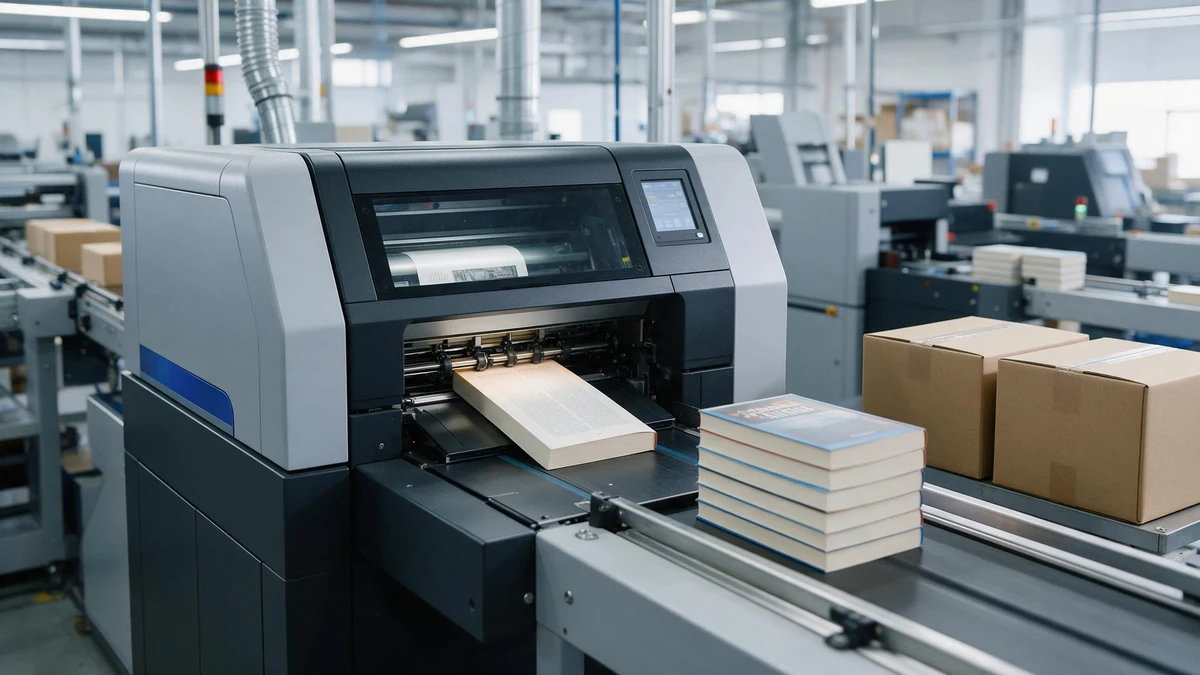
Print on demand prints a single copy only after an order arrives — no bulk run, no warehouse of unsold stock.
How much does it cost to print each book? And how do you go about choosing the right company for whatever your goals happen to be? LeadWorks generally suggests starting with how far a company can distribute your book, rather than just the cheapest price per copy, because those two things rarely end up pointing in the same direction.
Quick Takeaways
- Start with distribution reach, not just cheapest per-copy print price.
- KDP has no setup fee—pay only per-order printing costs.
- IngramSpark distributes to 40,000+ retailers and libraries globally.
- Expect royalties between 10% and 60%, varying by platform.
- Budget approximately $2–$5 per copy to print standard paperbacks.
What Are Print on Demand Book Companies and How Do They Work?
Print on demand book companies are services that print and ship a single copy only after a customer places an order. There’s no bulk run and no warehouse full of unsold stock. Blurb states its on-demand printing handles quantities from one book to hundreds, which means an author can sell five copies or five thousand without paying for inventory upfront. That shift kills the biggest risk in self-publishing: dead stock.
The term itself is short for “POD.” Traditional printing works the opposite way, you order 1,000 copies, pay for all of them, then try to sell them. POD flips the math. The order triggers the print.
What Is the Upload-to-Delivery Flow?
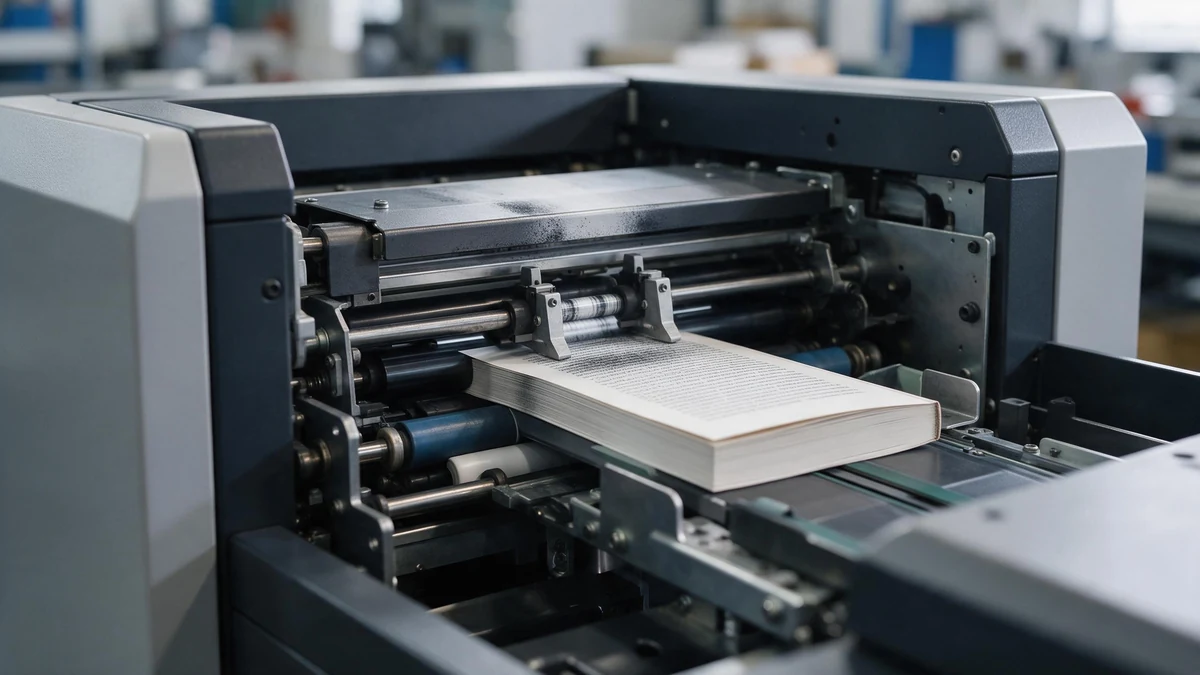
The order triggers the print: pages run on digital presses, one book at a time.
A POD order moves through five fixed stages. Understanding them tells you where quality and time actually get decided.
- File submission: You upload a print-ready interior PDF and a cover file. Most platforms require PDF/X-1a with embedded fonts and a 0.125-inch bleed so no white edges appear after trimming.
- Proofing: The system flags spine-width errors, low-resolution images (below 300 DPI), and color-space mismatches. Skipping a physical proof is the single most common cause of reprints.
- Printing: Pages run on digital toner or inkjet presses, one book at a time, rather than offset plates built for huge volumes.
- Binding: Perfect binding (glued spine) is standard for paperbacks; case binding (hard sewn covers) is offered by some firms for hardcovers.
- Drop-shipping: The printer ships straight to the buyer. The author never touches the box.
Who Runs These Platforms?
The field is dominated by a handful of names. Shopify’s 2026 guide lists seven core services: IngramSpark, Lulu, Blurb, BookBaby, Barnes & Noble Press, Amazon KDP, and Draft2Digital. Amazon’s KDP charges nothing to publish through its dashboard, while IngramSpark plugs into Ingram’s distribution network, described as the world’s largest.
Here is the catch these platforms rarely stress: consumer POD presses prioritize speed and low cost, not finish. If you need special processes, foil, edge printing, or textured stock, integrated manufacturers like LeadWorks run those in-house for publishers and brands, a tier most mass POD services simply don’t offer.
How Much Does POD Book Printing Actually Cost Per Copy?
A standard 200-page 6×9 black-and-white paperback costs between $4.50 and $5.50 per copy to print through major print on demand book companies. Amazon KDP sits at the low end, with Reedsy’s 2026 comparison citing an example print cost of $4.94 and 1,3 day shipping. That base cost sets your pricing floor.

File submission, proofing, printing, binding, drop-shipping — five fixed stages decide quality and time.
Print cost and author profit are two different numbers. The base print cost is what the printer keeps. You set a retail price above that. The gap, minus the platform’s cut, is your take-home.
For a book printed at $4.94 and sold at $14.99, roughly $4,6 lands in your pocket after the retailer and distribution share.
What does a real 200-page paperback cost across platforms?
Print costs vary by paper, trim size, and channel. Here is a realistic 2026 breakdown for the same 200-page 6×9 paperback priced at $14.99 retail.
| Provider | Base print cost | Retail price | Author take-home (direct) |
|---|---|---|---|
| Amazon KDP | $4.94 | $14.99 | $5.55 |
| IngramSpark | $5.10 | $14.99 | $4.20 |
| Lulu | $5.30 | $14.99 | $4.00 |
What hidden fees cut into your margin?
The base print cost is only part of the story. Watch for these line items that quietly shrink profit:
- Setup charges: Some services bill a one-time title fee. KDP and Lulu charge $0, while IngramSpark historically charged a title setup fee before waiving it for certain promotions.
- File revision fees: Changing an uploaded interior or cover after approval can trigger a reupload charge, often around $25 per file at distribution-focused platforms.
- Proof copies: A physical proof runs at print cost plus shipping, usually $8–12 landed. Order one. Skipping it means color and margin errors ship straight to buyers.
- Distribution expansion: Expanded retail reach (bookstores, libraries) often forces a steeper wholesale discount, up to 55%, which guts your per-copy earnings.
LeadWorks’ view: POD per-copy pricing favors convenience, not margin. Once you need consistent color fidelity, special finishes like edge printing, or runs above a few hundred copies, short-run offset usually beats POD on cost per unit. Run the math before committing.
How Much Do Authors Actually Keep? A Royalty and Profit-Margin Breakdown
On a $14.99 200-page paperback, authors keep roughly $3.00 to $6.25 per sale, depending on the platform and whether they choose extended distribution. The biggest swing is the distributor discount (the cut retailers and wholesalers take).
Amazon-only sales pay the most; bookstore distribution pays the least. Pick your channel based on where buyers actually find your book.
The math is simpler than most authors think. Your royalty equals the list price, minus the platform’s cut, minus your print cost. Amazon KDP pays a flat 60% of list on paperbacks, then subtracts printing. IngramSpark lets you set a trade discount of 30% to 55%, the higher you set it, the more bookstores will stock you, but the less you keep.
What does a $14.99 paperback actually earn on each platform?
Here is the net royalty for one $14.99, 200-page black-and-white paperback. Print cost reflects standard 6×9 pricing near the $4.94 figure Reedsy’s 2026 comparison cites for KDP Print.
| Channel | Platform/Retail Cut | Print Cost | Net to Author |
|---|---|---|---|
| Amazon KDP (Amazon sales) | 40% | $4.94 | $4.05 |
| Amazon KDP (Expanded Distribution) | 60% | $4.94 | $1.06 |
| IngramSpark (55% discount) | 55% | $5.10 | $1.65 |
| IngramSpark (30% discount) | 30% | $5.10 | $5.39 |
| Lulu (direct retail) | ~20% creator fee | $5.30 | $6.70 |
| BookBaby (bookstore) | 55% | $5.50 | $1.25 |
Which print on demand book companies leave authors with the most?
Lulu direct sales keep the most per copy because you skip the retail middleman entirely, but you also handle your own marketing and traffic. KDP wins on Amazon’s built-in buyers. Set IngramSpark at a 30% discount only if you don’t need bookstore stocking; most stores refuse anything under 40%.
One trade secret from print on demand book companies: the “returnable” setting on IngramSpark can trigger bookstore orders but also leaves you paying for unsold returns. For premium runs with edge printing or special finishes, authors often shift to a dedicated printer like LeadWorks, where in-house process control keeps per-unit quality consistent across larger quantities.
Are Print on Demand Books Good Quality? Paper, Binding, and Print Comparison
Print on demand book companies produce quality that matches short-run offset for most black-and-white paperbacks, but gaps appear in color accuracy, paper feel, and binding tightness. A standard POD paperback uses 55,60 GSM paper (grams per square meter, a measure of thickness and weight), while a premium offset trade book often runs 70,80 GSM. The difference is real but subtle for a reader flipping pages.

POD quality matches short-run offset for most paperbacks; gaps appear in color, paper feel, and binding.
What paper and binding do POD books actually use?
Most POD titles ship on cream or white uncoated stock, perfect-bound with a hot-melt glue spine. Here is where the choices matter:
- Cream 55 GSM paper: softer on the eye, standard for novels and memoirs; hides show-through (text visible from the other side) better.
- White 60 GSM paper: sharper contrast for diagrams, workbooks, and technical text; preferred when images sit next to body copy.
- Gloss vs. matte cover lamination: matte resists fingerprints and looks higher-end; gloss boosts color saturation but shows scuffs after shipping.
- Perfect-bind durability: a well-glued spine survives 1,000+ openings; a cold-glue job on a 400-page block can crack within months.
Why does color interior pricing jump so sharply?
Color interiors cost three to five times more than black-and-white, which is the single biggest quality-versus-budget decision. Standard color on uncoated paper can look flat; premium color on coated stock adds dollars per page. Reedsy’s 2026 comparison lists KDP Print as the lowest-cost reviewed option at $4.94 per copy for black-and-white, but full-color photo books routinely cross $20 for the same page count.
Where do visible quality gaps appear between providers?
Gaps show up most in color calibration, trim accuracy, and cover finish. Spine alignment can drift 1,2 mm between batches on high-volume networks, and gutter margins sometimes swallow text on 350+ page blocks. For authors needing tight color control, layflat binding, or special effects like foil or edge printing, specialist manufacturers such as LeadWorks handle in-house process control that distributed POD networks don’t offer as a standard option. The trade-off: minimum order quantities return, and single-copy ordering disappears.
Order a physical proof before any launch. Checking GSM paper density on screen tells you nothing about how the spine cracks or how saturated your cover prints in real light.
How Do POD Companies Handle Returns, Defects, and Reprint Complaints?
Most print on demand book companies replace a confirmed defective copy for free, but they rarely accept open-ended returns the way a bookstore does. Because each book is printed to order, there’s no shelf stock to send back. Instead, you file a claim with photos, and the company reprints or issues a credit. Defect rates in digital POD typically run 1,3% of copies.
What counts as a defect, and how do you claim one?
A defect means a printing or binding fault the buyer didn’t cause: crooked trim, smeared ink, missing pages, a cracked spine, or color that drifts far from the proof. Amazon KDP, which lets you publish paperbacks and hardcovers free through its KDP dashboard, handles reader returns and defect refunds directly, so the author rarely touches the complaint. IngramSpark, part of the Ingram Content Group distribution network, treats returnability as a setting you switch on for retail orders, and unsold returns can be destroyed or shipped back at your cost.
Keep the damaged copy. Nearly every company asks for timestamped photos within a set window, often 30 days of delivery.
Why does in-house process control lower defect rates?
In-house control means one factory owns prepress, printing, binding, and inspection under a single roof. Brokered printing passes your file through a middleman to an unknown plant, so nobody checks the proof against the final copy. LeadWorks runs its full workflow in-house for 300+ publishers and brands, which lets staff catch a color shift or loose spine before a carton ships, rather than after a reader complains.
That gap matters at scale. A 2% defect rate on a 500-copy order is 10 ruined books plus reship cost and delayed reviews. Specialty finishes like edge printing raise the stakes further, since a smeared gilt edge can’t be fixed by reprinting a single page.
What reprint terms should authors expect?
| Policy area | Typical POD standard |
|---|---|
| Free reprint on confirmed defect | Yes, with photo proof |
| Claim window | 30 days from delivery |
| Reader return refunds | Handled by platform (KDP, retail) |
| Reorder credit for batch error | Per-copy credit or free rerun |
Ask one question before you sign: does the company credit the whole batch if a systemic error slips through, or only the copies you photograph? For specialty jobs, request a bound physical proof, not just a digital one.
Which Print on Demand Company Is Best for Books? A Scenario-Based Guide
There’s no single best print on demand book company. The right pick depends on where you sell. Choose KDP for Amazon-only reach, IngramSpark for bookstore and library distribution, Lulu for direct-to-reader sales, and a specialty printer when you need premium finishes. Reedsy’s 2026 comparison flagged KDP Print as the lowest-cost option, with an example cost of $4.94 and 1,3 day shipping.
Who should pick KDP, and who should skip it?
Pick KDP if most of your sales happen on Amazon and you want zero upfront cost. Amazon KDP publishes paperbacks and hardcovers for free through its dashboard. Skip it if you want wide bookstore placement. KDP’s “expanded distribution” exists but gives shallow trade discounts, so brick-and-mortar stores rarely stock KDP titles.
When does IngramSpark beat everything else?
IngramSpark wins when bookstores, libraries, and schools are your buyers. It plugs into Ingram, widely called the world’s largest book distribution network, reaching tens of thousands of retail accounts. Avoid it if you only sell online casually. You set trade discounts and returns policy yourself, which trips up first-timers who don’t understand wholesale margins.
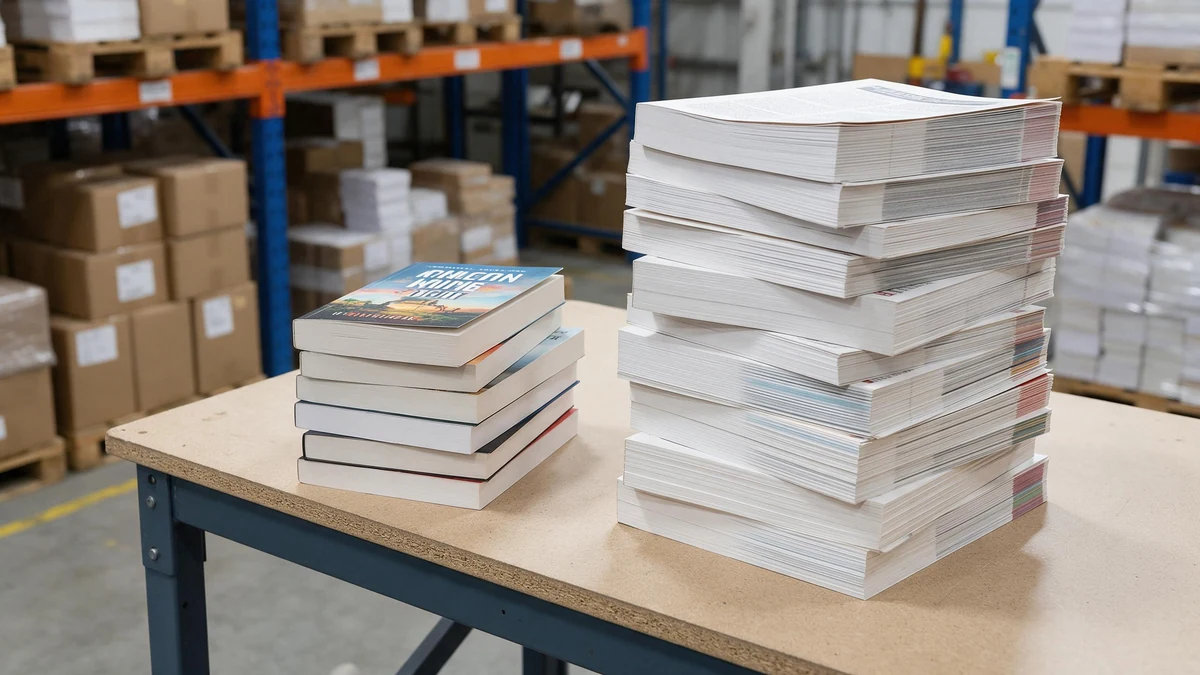
POD wins below 300–500 copies; above it, short-run offset drops the per-copy price faster.
For direct sales, Lulu is the practical choice. It prints from a global printer network and connects to your own storefront, so you keep the customer relationship and a larger slice of each sale.
Which route fits a premium or special-finish book?
Mass POD platforms print clean interiors, but they can’t do edge printing (color or art applied to the page edges), foil stamping, or custom cloth covers. For art books, limited editions, and brand gift books, a dedicated printer like LeadWorks handles in-house special processes that the big aggregators route out or refuse. The trade-off is minimum order quantities, so this suits short runs of 300 copies and up, not single-copy fulfillment.
| Service | Best for | Avoid if |
|---|---|---|
| KDP | Amazon-only reach, free setup | You need bookstore shelves |
| IngramSpark | Library and retail distribution | You dislike managing trade discounts |
| Lulu | Direct storefront sales | You want Amazon’s buyer traffic |
| Specialty printer | Foil, edge printing, cloth covers | You need true single-copy runs |
Smart authors often run two services at once: KDP for Amazon orders and IngramSpark for every other channel. This combination captures Amazon’s traffic while keeping your title orderable at any store in Ingram’s catalog.
When Does POD Stop Making Sense Versus Short-Run Offset Printing?
Print on demand book companies stop winning on cost once you order roughly 300 to 500 copies at once. Below that, POD’s zero-inventory model is cheaper. Above it, short-run offset printing drops the per-copy price faster because fixed setup costs spread across more units. The crossover shifts with page count, trim size, and whether you want special finishes.
Here is the counterintuitive part most lists skip: POD margins shrink as volume rises. A single POD paperback might cost $4.94 to print, as shown in Reedsy’s 2026 book printer comparison. That same unit price barely moves whether you order 10 copies or 400. Offset works the opposite way. The plates and press setup cost the same no matter the run, so the more you print, the cheaper each book gets.
Where exactly is the crossover point?
The break-even typically lands between 500 and 1,000 copies for a standard trade paperback. At 1,000 offset copies, per-unit cost can fall to $2.00,$3.00, well under the $4.50,$5.50 POD range covered earlier.
Below 500 copies, you rarely recover offset’s setup fee of $400,$800.
| Quantity | Method | Est. per-copy cost | Inventory risk |
|---|---|---|---|
| 1–50 | POD | $4.50–$5.50 | None |
| 300–500 | POD or offset | Near parity | Low |
| 1,000+ | Offset | $2.00–$3.00 | You hold stock |
When do special processes tip the choice toward offset?
Special finishes push the crossover lower. POD presses can’t do edge printing (ink or art applied to the stacked page edges), foil stamping, or custom spot gloss. These need offset or dedicated finishing lines. For a limited author edition or a brand gift book, LeadWorks runs these in-house with process control across books, cards, and packaging. If you want colored sprayed edges on 600 copies, offset is the only realistic path. POD cannot replicate it at any volume.
So match the method to the goal. Testing a manuscript? Stay with POD. Fulfilling a confirmed 800-copy order with foil and edge art? Offset wins on both cost and capability.
Common Mistakes Authors Make Choosing a POD Book Company
The most expensive mistakes authors make with print on demand book companies are pricing too low to survive distribution discounts, skipping the physical proof, misreading returnability settings, and locking into a platform-owned ISBN. Each one quietly drains money. On a book priced at $14.99, a single pricing error can turn a $4.00 profit into a loss of over $1.00 per copy sold through retail.
Why does pricing a book too low wipe out your profit?
Pricing too low ignores the retail discount baked into expanded distribution. Most print on demand book companies take a 55% wholesale discount for bookstore and library channels.
On a $14.99 paperback, that leaves only about $6.75 for you to split with printing. If printing costs $5.20, your royalty drops to roughly $1.55, and if you priced at $11.99 to “stay competitive,” you lose money on every wholesale sale.
Set your list price so the net after the 55% discount still covers print cost plus a real margin. A smart floor is list price ≥ print cost ÷ 0.30.
What happens if you ignore returnability settings?
Returnability decides whether bookstores can send unsold copies back. Turn it off, and most physical stores won’t stock you. Turn it on without understanding the terms, and you may get charged for returned books that arrive damaged and can’t be resold. IngramSpark’s distribution network, described as the world’s largest book distribution network in 2026, lets you choose a returns model, but a “returnable and destroyable” setting can cost you the full print price of every rejected copy.
Why do skipping proofs and platform ISBNs cost you later?
- Skipping the physical proof: A $15 printed proof catches gutter margin creep and color shifts a PDF never shows. Reprinting an entire launch batch after a binding error costs far more than one test copy.
- Locking into a platform’s free ISBN: A free ISBN from a POD platform lists that platform as publisher. You can’t move the book to another company without re-registering. Buying your own ISBN keeps you in control across every print on demand book company you use.
LeadWorks advises authors to always order a proof and own their ISBN before scaling, control at the file and metadata level prevents the costliest reprints.
Frequently Asked Questions About POD Book Companies
Yes, most print on demand book companies accept orders with no minimum quantity. You can print a single copy at the same per-unit cost as a bulk run. Reedsy’s 2026 comparison lists KDP Print as the lowest-cost reviewed option, with a sample unit cost of $4.94 and shipping in 1 to 3 days. That makes one-off printing viable for testing a cover or sending author copies.
Are there POD options with no minimum order?
Nearly all major services skip minimums entirely. You order one book or one thousand, and the price per copy stays fixed. This is the core difference from offset printing, where setup plates force you into 300-copy-plus runs. For authors who want flexibility, no-minimum ordering removes the biggest financial risk of self-publishing.
Which POD book companies operate in the USA?
The largest US-based or US-serving options include Amazon KDP, IngramSpark, Lulu, BookBaby, Barnes & Noble Press, Blurb, and Draft2Digital. IngramSpark runs on Ingram’s distribution network, widely described as the largest in the book trade, which gives US authors the broadest wholesale reach. For publishers and brands needing specialty finishes like edge printing, LeadWorks handles short-run and custom book production with in-house process control.
How long does POD fulfillment take?
Printing itself takes 2 to 5 business days at most services. Add shipping, and a domestic US order usually arrives within 5 to 10 business days total. Holiday peaks can stretch this to two weeks. Always order author proofs at least three weeks before a launch date.
Do POD books qualify for bookstore shelves and library orders?
Partly. Bookstores and libraries buy through wholesale channels, and they expect a standard 55% discount plus returnability. KDP books set to “expanded distribution” rarely meet both conditions, so stores skip them. IngramSpark lets you enable returns and set the full trade discount, which is why it remains the practical route for shelf placement and library purchase orders.