Affordable Book Printing Costs Explained
Affordable book printing typically costs between $2 and $8 per copy through print-on-demand services in 2026, with prices dropping to around $0.80 per unit for large offset runs. KDP Print ranked lowest in a 2026 comparison of major printers at approximately $4.94 per paperback. Your actual per-copy price depends heavily on page count, ink type, trim size, and order volume, and color interior pages alone can triple your total cost.
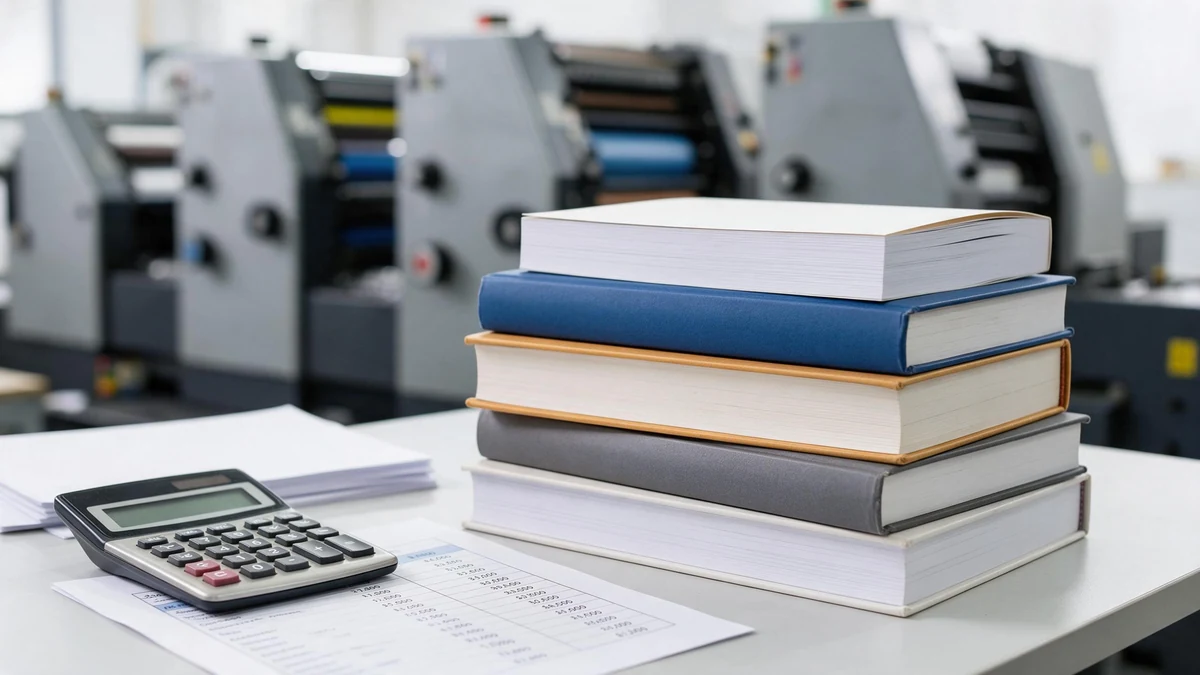
Affordable book printing runs about $2–$8 per copy on POD, dropping near $0.80 on large offset runs.
Below, we answer the questions that authors actually tend to ask. What does affordable book printing really cost per copy in 2026? Which pricing factors move the needle the most? Is print-on-demand genuinely cheaper than ordering an offset bulk run?
How do you bring the costs down without making your book look cheap? And which service really fits your budget and your print volume? These are the things we walk through, one at a time.
Quick Takeaways
- KDP Print starts around $4.94 per paperback copy in 2026.
- Page count and ink type drive most per-book costs.
- Print-on-demand means zero upfront fees but higher per-unit costs.
- Offset printing only gets cheap above 500–1,000 copies.
- Color interior pages can instantly triple your printing price.
What Is the Average Cost to Have a Book Printed?
A single book will run you somewhere between $2 and $8 per copy when you use print-on-demand (POD), where books get made one at a time, and that price falls to approximately $0.80 to $3 per copy with offset printing once your run goes past 500 copies. The 2026 Books.by comparison listed Amazon KDP Print at approximately $2.20 for a 100-page paperback, $3.40 at 200 pages, and $4.60 at 300 pages.

Page count, not the cover, drives most of the per-book cost — a unit price covers paper, ink, and binding.
That page count, not the cover, is what really drives most of your cost per book.
The gap between POD and offset is the single most important number for affordable book printing. POD prints one copy at a time with zero setup, so you end up paying a flat per-page rate forever. Offset prints from metal plates, so you pay a high fixed setup cost that then gets divided across every copy. Print 50 copies and that setup makes each book expensive. Print 2,000 and it nearly disappears completely.
What does a single unit price actually include?
A quoted unit price covers paper, ink, printing, and binding, and usually nothing else beyond that. In the same 2026 roundup, the Lulu rate ran approximately $3.74 at 100 pages and $7.94 at 300 pages, which means paper weight and color pages alone can nearly double your cost on a single title.
These line items tend to hide below the headline price:
- Plate/setup fee: $100 to $300 per title on offset jobs, charged once before any copy actually prints. Short-run digital printers often waive it, and some will accept runs as small as 10 copies with no plates and no minimum.
- Shipping: often $0.50 to $1.50 per book on bulk freight, and it scales with weight, so a 400-page hardcover costs far more to ship than a thin paperback does.
- Proof copy: $15 to $40 for a physical sample before you approve the full run. Skip this step and a single binding error multiplies across 1,000 copies.
LeadWorks works at the offset end of this scale, where keeping the whole process in-house keeps the per-unit cost down on runs above 500 while still adding special finishes like edge printing. For a first-time author just testing demand, though, POD stays cheaper until the volume justifies paying for plates. The break-even point, which is covered in section three, usually sits somewhere near 300 to 500 copies.
What Determines Affordable Book Printing Costs?
Five specs drive affordable book printing costs: quantity, page count, trim size, paper stock, and binding. Page count alone can swing the per-unit price by over 100%, the 2026 Books.by comparison lists Amazon KDP Print at $2.20 for 100 pages versus $4.60 for 300 pages. Lock these five choices early, and you control most of the invoice.
How much does each factor add to the final invoice?
Page count and quantity do the heaviest lifting, together they account for about 60% of a typical paperback invoice, since more pages mean more paper and press time, while a larger run spreads the fixed setup thinner. Here’s a rough breakdown of where your money goes:
| Cost driver | Share of invoice | What moves it |
|---|---|---|
| Page count | 35% | More pages = more paper and press time |
| Quantity | 25% | Setup cost spreads across more copies |
| Paper stock | 18% | Weight (gsm) and coating |
| Binding | 14% | Perfect bind vs case bind vs saddle stitch |
| Trim size | 8% | Non-standard sizes waste paper |
Paper is the sleeper cost. A jump from 70gsm to 100gsm stock (gsm means grams per square meter, paper weight) can raise material cost by double digits on a long book. Color pages hurt most: black-and-white runs at roughly $0.016 per page, while color climbs to $0.036, more than double.
Why do two identical-page books differ 40% in price?
Spec choices, not content, create the gap. Picture two 250-page novels. Book A uses a standard 6×9 trim, 60lb cream paper, and perfect binding. Book B uses an odd 7×10 trim, glossy 80lb stock, and a sewn hardcover. Book B costs around 40% more, every upgrade stacks.
Trim size is the trap authors miss. A standard trim cuts cleanly from master sheets with little waste. A custom trim forces the printer to trash offcuts, pushing cost up 5,10%. LeadWorks advises publishers to pick press-standard sizes first, then upgrade paper only where the reader notices. That sequencing keeps affordable book printing genuinely affordable without a cheap-looking result.
Print on Demand vs Offset vs Digital — Which Is Cheaper at Your Quantity?
Print on demand (POD) wins below 300 copies; offset wins above 500; digital short-run owns the gap between. The break-even point sits at 300,500 units, where POD’s flat per-copy rate stops beating offset’s falling unit cost. In 2026, one roundup listed POD at $4.94 per book, fine for one copy, painful for a thousand.
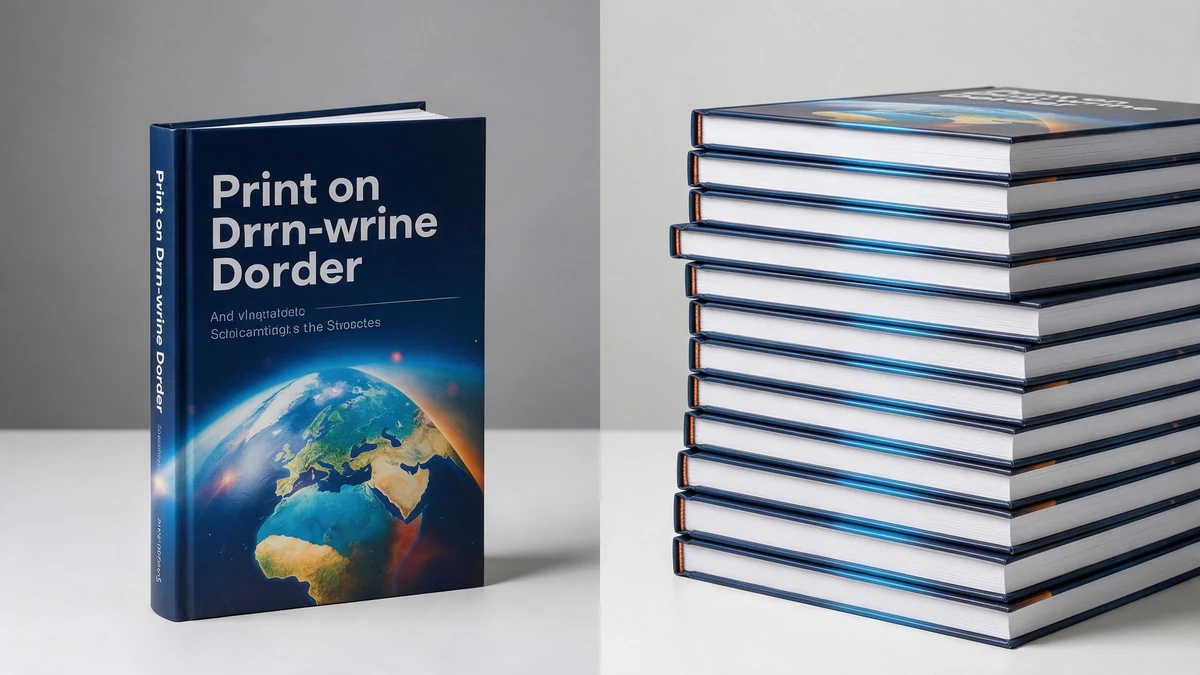
POD wins below 300 copies, offset above 500 — the break-even sits near 300–500 units.
Counterintuitive: Adding color interior pages hurts your budget far more than upgrading the cover. Color interior printing can instantly triple your per-copy cost, while page count—not cover design—drives most pricing. Evidence: KDP Print’s 2026 rates run $2.20 for a 100-page paperback, $3.40 at 200 pages, and $4.60 at 300 pages. The cover barely moves the needle by comparison.
Here is why the math flips. POD prints one book at a time, so each copy carries the full machine cost. Offset uses printing plates (metal sheets that stamp ink onto paper), so you pay a $400,$800 setup once, then each extra copy is nearly free. Spread that setup over 1,000 books and it almost vanishes.
What does each method cost per copy at common quantities?
The table below shows a 200-page paperback. POD and digital prices build on real 2026 data, Amazon KDP Print lists a 200-page book at $3.40, and specialty POD services run higher.
| Quantity | POD | Digital short-run | Offset |
|---|---|---|---|
| 1 | $5.00 | n/a | n/a |
| 50 | $4.80 | $5.20 | n/a |
| 250 | $4.70 | $3.60 | $3.90 |
| 500 | $4.65 | $2.90 | $2.40 |
| 1,000 | $4.60 | $2.50 | $1.60 |
| 2,500 | $4.55 | $2.20 | $1.05 |
When should you pick each one?
Choose by risk, not price alone. POD costs more per copy but zero upfront, ideal for testing a title. Digital short-run clears setup-free at 10,25 copies, so it fits author events and small reprints. Offset only pays off once you commit to volume.
- POD: Best under 300 copies; no inventory, no cash tied up.
- Digital short-run: Best 50–500 copies; bridges the gap with no plate fees.
- Offset: Best above 500; LeadWorks recommends it for publishers running 1,000+ where in-house process control keeps the per-unit rate low and affordable book printing stays profitable.
Run your own number: divide total offset cost (setup plus per-copy) by your run size, then compare it to the POD rate. The quantity where they match is your real break-even.
How Much Does It Cost to Print a 400-Page Book?
A 400-page 6×9 paperback costs roughly $6.50,$8.50 per copy with print-on-demand, $4,$5.50 per copy with digital runs of 100,250, and $2.50,$3.80 per copy with offset runs of 1,000+. The jump really comes down to paper volume, since 400 pages uses twice the sheets of a 200-page book.
So the per-page charge ends up dominating the price at this length.
You can run the math with an actual per-page model to see how this works. One 2026 print-on-demand service lists pricing that starts at $1.26 plus $0.016 per black-and-white page. For 400 pages, that comes to $1.26 + (400 × $0.016) = $7.66 per copy before shipping. A 200-page book on the same model costs $4.46.
You double the pages, but the cost rises 72%, not 100%, because the fixed $1.26 base spreads across more paper.
Why does page count scale cost nonlinearly?
Page count scales cost nonlinearly because two hidden thresholds break the straight line. The first is spine thickness, and a 400-page book crosses roughly 0.9 inch (23 mm) on standard 60# stock, which forces perfect binding instead of saddle-stitch and adds the cost of spine glue. The second is paper-batch pricing, since offset printers buy paper by the ton, and crossing a batch tier, say from 1.5 to 2 tons for a long book, can bump your paper line item in a single step.
Here is how the three methods compare for one 400-page title:
| Method | Quantity | Per-copy cost | Total |
|---|---|---|---|
| Print-on-demand | 1 | $7.66 | $7.66 |
| Digital | 150 | $4.80 | $720 |
| Offset | 1,500 | $3.10 | $4,650 |
Watch the per-copy drop here, because offset cuts the price 59% versus POD since the setup and plate cost gets divided across 1,500 units. For affordable book printing of long titles, LeadWorks advises authors to confirm the exact paper GSM before they get a quote, since a 70# stock on 400 pages can push the spine past the perfect-bind glue limit and quietly raise your unit price.
How Does Paperback Binding Change the Price?
Binding changes a book’s per-unit cost by $0.30 to $4.00, depending on the method. Perfect binding (glued spine) is the cheapest for paperbacks at roughly $0.50,$1.00 extra per copy.
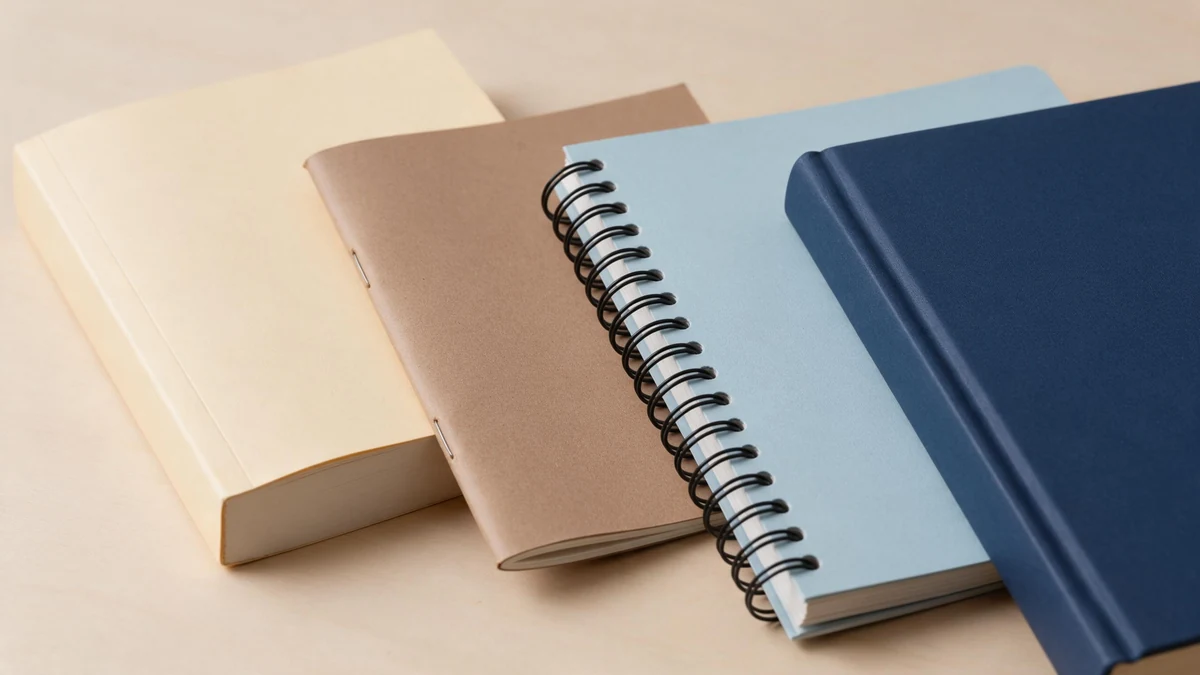
Binding moves the per-unit cost by $0.30 to $4.00 — perfect, saddle, spiral, or case bound.
Case binding (hardcover) adds $3,$8. The right choice depends on page count and run size, pick wrong, and affordable book printing quietly turns expensive.
Each method has a page-count sweet spot. Push past it, and quality or cost falls apart.
| Binding Type | Added Cost/Unit | Page Range | Best For |
|---|---|---|---|
| Saddle-stitch | $0.10–$0.40 | 8–64 pages | Booklets, zines, manuals |
| Perfect binding | $0.50–$1.00 | 40–800 pages | Novels, trade paperbacks |
| Spiral/coil | $1.00–$2.50 | 20–470 pages | Cookbooks, workbooks |
| Case/hardcover | $3.00–$8.00 | 60+ pages | Premium editions, gifts |
Which Binding Quietly Inflates Your Cost?
Spiral binding looks cheap but scales badly. Each coil is inserted, often by hand or on slow machines, so a 2,000-copy spiral run costs more per unit than perfect binding on the same count. Saddle-stitch fails past 64 pages: the center pages bulge and creep (text drifts toward the edge). LeadWorks advises switching to perfect binding once your page count crosses 48, because the trim fix on a stapled book eats any savings.
Hardcover is where budgets break. A 300-page case-bound book can double your unit cost versus the same paperback, fine for a gift edition, wasteful for a 500-copy author run.
When Does Upgrading Binding Actually Pay Off?
Upgrade binding when retail price supports it, not before. A hardcover lets you charge $8,$15 more at retail, so the $3,$8 cost jump pays back fast at bookstore or library channels. For print-on-demand paperbacks, binding is already baked in, a 2026 Reedsy comparison listed KDP Print at $4.94 per book, perfect-bound by default.
For runs under 100 copies, stay with perfect binding. LeadWorks runs its binding in-house, which keeps special finishes, like edge printing on the page block, from adding a third-party markup that outside binders stack on top.
Which Spec Choices Cut Cost Without Hurting Quality?

Paper and color swaps cut 10–30% with no visible loss — grayscale alone can halve the page cost.
Four spec swaps cut affordable book printing costs by 10,30% with no visible quality loss: dropping from 70lb to 60lb paper, choosing cream over bright-white stock, printing a grayscale interior instead of color, and sticking to standard trim sizes. Switching from color to grayscale alone can slash per-page cost by half or more, based on 2026 POD pricing.
How much do paper and color swaps actually save?
Color pages are the biggest hidden cost. In the 2026 Books.by comparison, color printing runs $0.036 per page versus $0.016 for black-and-white, more than double.
A 250-page novel printed in grayscale instead of color saves around $5 per copy. On a 500-copy run, that’s $2,500 kept in your pocket.
Paper weight matters less but still counts. Dropping from 70lb (text weight) to 60lb paper trims 8,12% off paper cost and makes the book lighter, which lowers shipping too. The catch: 60lb stock shows more “show-through” (print bleeding faintly from the back of the page). For a text-only novel, nobody notices. For a workbook with heavy ink, stay at 70lb.
| Spec swap | Typical savings | When it hurts quality |
|---|---|---|
| 70lb → 60lb paper | 8–12% | Heavy-ink or double-sided art pages |
| Bright-white → cream stock | 3–7% | Photo books needing true color |
| Color → grayscale interior | 50%+ per page | Children’s books, art, charts |
| Custom → standard trim | 10–15% | Rarely — standard sizes look fine |
Which swaps should you never make?
Never cut cover finish on a book meant to sell in stores. A matte or gloss laminate adds pennies per copy yet protects the cover from scuffing during shipping, strip it, and returns climb. By contrast, the safe swaps cost you nothing visible: custom trim sizes are free money saved, since a 6×9 or 5.5×8.5 inch book runs on stock cutting dies while odd sizes trigger a custom-cut surcharge of 10,15%. Cream paper also reads easier for fiction and hides cheaper stock better than bright-white.
The rule: trim interior specs the reader won’t see, protect the surfaces they will.
Affordable Book Printing — Frequently Asked Questions
These are the four questions first-time authors search most before placing a print order. Each answer is built for quick extraction, with real 2026 pricing and lead times you can quote back to a printer.
What’s the most affordable way to print a book?
Print-on-demand (POD) is the most affordable way to print a book when you need fewer than 300 copies, because it has no setup fee and no minimum order. In a 2026 roundup, KDP Print came in cheapest at $4.94 per book, ahead of Draft2Digital at $5.92 and IngramSpark at $6.00. For 300-plus copies, offset printing beats all three per unit.
Where is the cheapest place to print a single copy for personal use?
A single personal copy is cheapest through a page-based POD calculator, where short books cost the least. A 2026 comparison listed Amazon KDP Print at $2.20 for 100 pages, rising to $4.60 at 300 pages. Thicker books climb fast, pick a 5×8 trim and black-and-white interior to stay at the bottom of the price band.
Is POD worth it for first-time authors?
Yes. POD removes inventory risk, which matters when you can’t predict sales. You pay per copy only as orders arrive, so there’s no $1,500 offset print run gathering dust in a garage. The trade-off: per-unit cost stays high. Once you reliably sell 500+ copies a year, switch to offset and cut each unit by 40,60%. Treat POD as your proving ground, not your permanent plan.
What are typical lead times for affordable book printing?
POD files print and ship in 2,7 business days. Short-run digital jobs run 7,10 business days for runs starting at 25 copies. Offset runs take 2,4 weeks because of plate setup and larger volumes.
| Method | Min order | Lead time |
|---|---|---|
| POD | 1 copy | 2–7 days |
| Short-run digital | 10–25 copies | 7–10 days |
| Offset | 300+ copies | 2–4 weeks |
For special finishes like edge printing or foil, LeadWorks runs these processes in-house, which keeps turnaround on decorated covers closer to standard offset timelines instead of adding a separate vendor handoff.