How Custom Book Manufacturers Work and What They Offer?
A Custom Book Manufacturer is a company that designs, prints, binds, and finishes books to your exact specifications, handling everything from a single self-published memoir to a 50,000-copy corporate run under one roof. Costs hinge on run size and binding: print-on-demand suits fewer than 100 copies, while offset printing gets cheaper past 500. Common bindings include perfect bound, saddle-stitch, hardcover, and spiral, with paper weights from 60 lb text to 100 lb cover stock. Distribution through Ingram reaches over 40,000 retail and library outlets worldwide.
This guide answers the questions people actually ask. What does a custom book manufacturer do, and how is it different from a regular print shop? What binding, paper, and finishing options do they generally offer? How much does custom book manufacturing cost, and what pushes the price up or down? And how do you pick the right one for your particular project? LeadWorks recommends starting with your run size and your binding type first, since those two decisions basically shape every quote you’ll end up getting.
Quick Takeaways
- Custom book manufacturers handle design, printing, binding, and finishing under one roof.
- Choose print-on-demand under 100 copies; switch to offset past 500.
- Decide run size and binding first—they shape every quote you get.
- Pick paper between 60 lb text and 100 lb cover stock.
- Distribute through Ingram to reach 40,000+ retail and library outlets worldwide.
What Does a Custom Book Manufacturer Actually Do?
A custom book manufacturer takes your finished manuscript and turns it into physical books through five stages handled under one roof: prepress, plate-making, offset printing, binding, and finishing. A print-on-demand service spits out one digital copy at a time, but a true manufacturer runs bulk orders, usually 300 copies or more, with tight control over the process, and that drops the cost per book sharply. A 200-page 6″x9″ paperback that costs $5.80 as a single copy falls to $2.15 per copy at 1,000 units in 2026, which is a 63% cut that comes entirely from spreading the fixed setup costs across the whole run.
What are the five core stages of book manufacturing?
Each stage feeds into the next one, and a mistake made early on multiplies across the entire run. Skip quality control at prepress, and you end up reprinting thousands of copies.
- Prepress: This is where files get checked and colors get separated. The manufacturer verifies your print-ready PDF for bleed, which is the extra image area past the trim edge, usually 3mm, along with embedded fonts and 300 DPI image resolution.
- Plate-making: This means creating aluminum printing plates, one for each ink color. A standard job uses four CMYK plates, and special jobs add spot colors like Pantone metallics.
- Offset printing: The ink transfers from the plate to a rubber blanket, and then onto the paper. This method holds sharp detail across huge runs while keeping the cost steady.
- Binding: The pages become a book block through perfect binding, sewn binding, or case binding when you want hardcovers.
- Finishing: This covers cover coating, foil stamping, embossing, and edge printing, meaning colored or patterned page edges.
How is a manufacturer different from print-on-demand?
A manufacturer prints and binds in batches using dedicated presses. Print-on-demand, on the other hand, prints a single copy digitally the moment someone orders it. Digital printing skips plate-making entirely, so it wins for one-off proofs and really tiny runs. Once you get to scale though, offset beats it on the cost per book and on keeping the color consistent across every single copy.
Full-service manufacturers like LeadWorks focus on controlling the process in-house and on special touches such as edge printing, which is the kind of finishing that separates a premium book from a basic paperback. This vertical control matters most when you order color-critical titles like art books or children’s picture books, where a shifted hue across a 2,000-copy run means an expensive reprint. According to Wikipedia’s offset printing overview, offset is still the standard for high-volume commercial book work because the rubber blanket protects the plate and extends its life across long runs.
Custom Book Manufacturer vs Print-on-Demand — Which One Do You Actually Need?
Choose a custom book manufacturer when you need 300 copies or more, tight color control, or special finishes; choose print-on-demand (POD), printing one book at a time only after someone orders it, for tiny runs, test titles, and zero inventory risk. The tipping point sits between 100 and 500 copies, where offset manufacturing undercuts POD on unit price. POD unit cost stays flat no matter how many you order, while offset gets cheaper with every extra copy because the setup cost (plates, makeready, ink calibration) spreads across the whole run.
Where exactly does offset beat POD on unit price?
Around the 200,500 copy mark for a standard paperback. Industry pricing shows a 200-page 6″x9″ paperback costs $5.80 for a single POD copy but drops to $2.15 per copy at 1,000 units in 2026, a 63% cut. POD can’t match that because it never earns economies of scale.
| Factor | Custom Book Manufacturer (Offset) | Print-on-Demand |
|---|---|---|
| Best run size | 300+ copies | 1–100 copies |
| Unit cost at 1,000 | ~$2.15 / book | ~$5.80 / book (flat) |
| Quality control | Press-side proofing, color matching | Auto digital, minimal check |
| Turnaround | 2–4 weeks | 3–7 days per order |
| Special finishes | Foil, edge printing, deckled edge | Rarely available |
When should you never use POD?
Skip POD if your book relies on precise color or premium touches. POD digital presses struggle to hold consistent skin tones across a run, and they can’t do foil stamping or gilded edges. LeadWorks builds its edge printing and special-process work around offset runs precisely because those finishes need press-side control POD platforms don’t offer.
One quiet trap: hybrid platforms bundle POD with distribution through Amazon and Ingram, which feels convenient, but you pay retail POD rates on every unit sold. For a book selling 2,000 copies a year, that convenience can cost thousands more than a single offset run stored in your garage.
What Book Formats and Binding Options Can You Order?
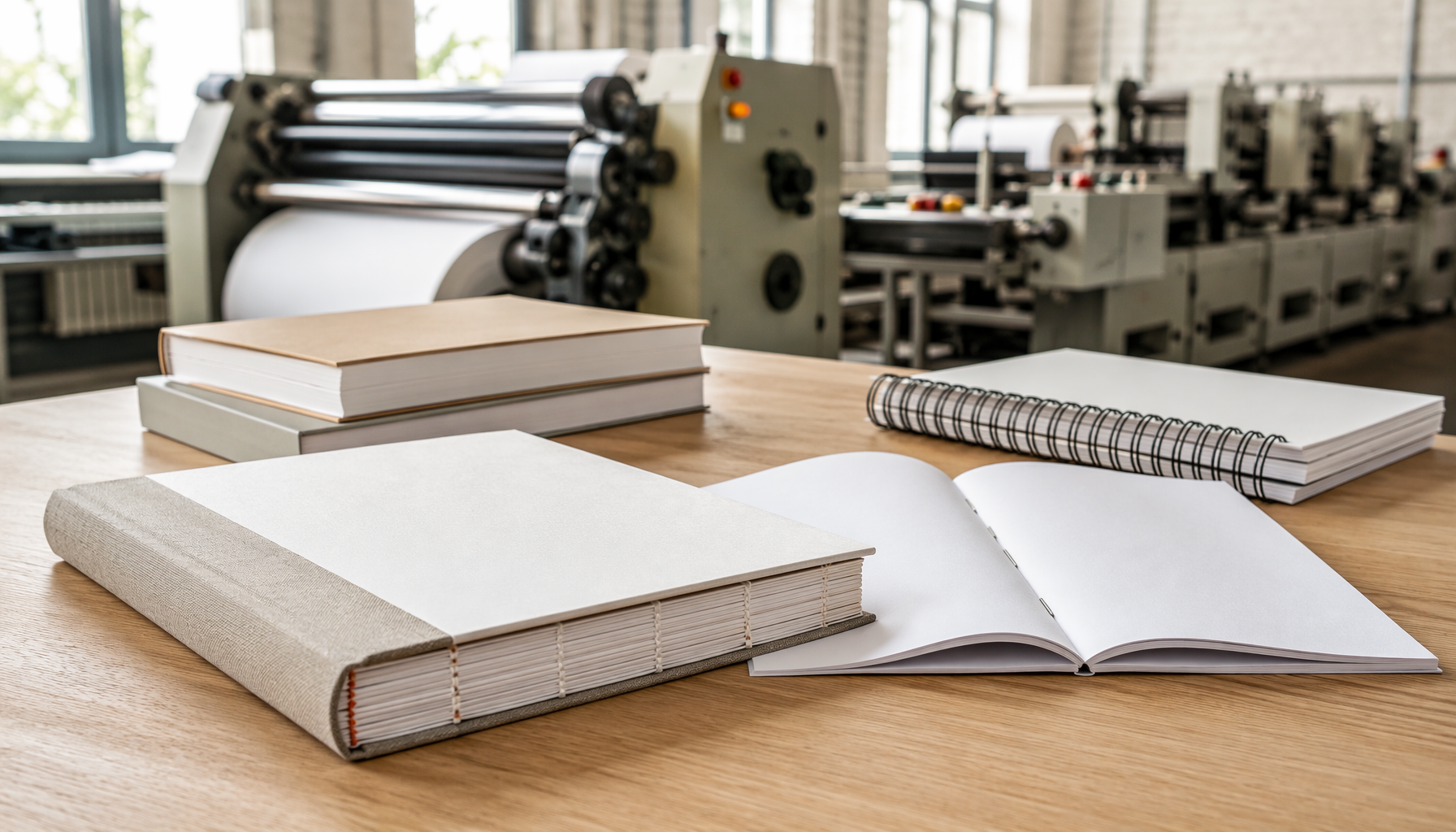
A custom book manufacturer gives you six main ways to hold a book together. These are hardcover, which is also called case-bound, softcover, which is also called perfect-bound, lay-flat, wire-O, spiral coil, and sewn hardcover. Each one fits a different purpose. Recipe books tend to use lay-flat binding so the pages stay open while you are cooking, while textbooks tend to use sewn hardcover because it holds up over time. Platforms like Lulu offer thousands of trim sizes and binding combinations as of 2026. The binding you pick really comes down to how the book will be used, not just how nice it looks on the outside.
⚠️ Common mistake: Ordering an offset print run of 300 copies to “save money per book.” This happens because offset’s low per-unit price masks high setup fees that only amortize past 500 copies. The fix: stay with print-on-demand under 100 copies and only switch to offset once your run clears 500.
Which binding type fits your project?
You want to match the binding to how people will read the book, considering that a book meant to lie open needs a different kind of glue than one that will sit on a shelf for 20 years.
- Perfect-bound softcover: The pages are glued to a cover that wraps around the spine. This is the cheapest option per copy, and it works well for novels and paperbacks that run under 400 pages.
- Case-bound hardcover: The pages are glued into a stiff board cover. This is the usual choice for gift books and photo books that need to survive being shipped around.
- Sewn (Smyth-sewn) hardcover: The folded sections of pages, called signatures, are stitched together with thread and then set into the cover. This is the best possible method for textbooks that get read hundreds of times.
- Lay-flat (Otabind or layflat glue): The spine is left loose from the cover so the pages can open flat to a full 180 degrees. This works best for cookbooks, sheet music, and manuals.
- Wire-O and spiral coil: Metal or plastic loops run through holes punched along the edge. These are perfect for planners, workbooks, and notebooks that need to fold all the way backward.
When do specialty finishes justify the cost?
Specialty finishes add somewhere between $0.30 and $2.00 to each book, depending on how much of the surface they cover, so it makes sense to save them for covers that actually help sell the book. Foil stamping, which is metallic lettering pressed into the surface, and embossing, which creates a raised texture, both look their best on titles and author names. Edge printing puts color or images along the outer edges of the pages, and it basically turns a closed book into something you would want to display. This is a core process at LeadWorks.
You should skip these finishes on paperbacks made in large numbers, since the profit margin on those is already very thin. Save them instead for limited editions, corporate gift books, or premium cookbooks where the buyer expects to pay around a $40 price tag. A hardcover with foil stamping and edge printing comes across as a luxury item, while the exact same content in a perfect-bound edition comes across as something disposable. Before you commit to foil or edge printing, ask for a physical proof, because both of these processes reveal flaws under studio lighting that a PDF on a screen hides completely.
Offset vs Digital Printing for Custom Books — How Do You Choose?
Go with digital printing when you need fewer than 250 copies, and pick offset once you’re printing more than 500. Digital has almost no setup involved, so running 100 copies of a 200-page paperback costs roughly the same per book as running 200 copies. Offset, though, carries a fixed setup fee. You’re paying for metal plates for each color plus a “makeready” run, which is the paper wasted while the press operators fine-tune the ink and get the registration lined up.
Together those add approximately $300 to approximately $800 before you print even a single book you can actually sell. That expense only starts to make sense once you spread it out across hundreds of books, which is why the crossover point lands somewhere between 250 and 500 copies for most trade titles.
How do the per-unit cost curves actually compare?
The cost per book drops sharply on offset as your volume climbs, while digital stays almost flat the whole way. Pricing across the industry shows that a 200-page 6″x9″ paperback runs $5.80 for a single copy but drops to $2.15 per copy at 1,000 units in 2026. That’s a 63% drop per book, and it happens because offset’s economics really start working in your favor at scale.
| Factor | Digital | Offset |
|---|---|---|
| Setup fee | $0–approximately $50 | $300–$800 |
| Sweet spot | 1–250 copies | 500+ copies |
| Per-unit at 1,000 | Flat, higher | Lowest, keeps falling |
| Color consistency | Varies page to page | Locked across run |
Which one gives better color for photo books?
Offset comes out ahead when you need tight, steady color across a long print run. The ink gets mixed just once and then held constant, so page 40 will match page 400. Digital toner or inkjet can drift a little between the start and the end of a batch. That drift is usually invisible in plain text, but it becomes noticeable in gradient-heavy art books or cookbooks that use full-bleed food photography.
Here’s a practical rule from a custom book manufacturer comparison: ask for a printed proof on the exact paper stock you plan to use before you commit to anything. As a Custom Book Manufacturer, LeadWorks builds these proofs right on the production press, so whatever you approve is what actually ships to you. And it’s worth skipping screen-only proofs, because monitors show more colors than any press can physically reproduce.
There’s one trap that tends to get overlooked, and that’s switching methods partway through a project. If you print 200 copies digitally now and then 800 copies on offset later, the two batches may not end up matching in color. So lock in your press choice before that first order goes through, especially if reprints matter to you down the line.
How Much Does It Cost to Get a Custom Book Printed?
A 200-page 6″x9″ black-and-white paperback costs about $5.80 as a single copy but drops to $2.15 per copy at 1,000 units, according to 2026 industry pricing data. That approximately 63% drop shows the core rule: unit price falls sharply as volume rises, because fixed setup costs spread across more books.
Five factors move your unit price the most. Page count and paper weight raise material cost. Color printing runs 3 to 5 times more than black-and-white per page. Hardcover binding adds $2 to $4 per book over softcover. And quantity ties everything together,the more copies, the lower each one costs.
What Are Real Unit Prices at 100, 500, and 2,000 Copies?
Here is a realistic range for a standard 250-page black-and-white paperback in 2026. These are per-copy figures, not totals.
| Quantité | Softcover B&W | Softcover Color | Hardcover B&W |
|---|---|---|---|
| 100 copies | $4.50 | $9.80 | $7.20 |
| 500 copies | $3.10 | $6.40 | $5.30 |
| 2,000 copies | $1.95 | $4.10 | $3.60 |
Notice the crossover point. Below 250 copies, digital printing keeps prices flat. Above 500, offset printing kicks in and prices tumble because plate setup is a one-time charge. A custom book manufacturer like LeadWorks controls these presses in-house, which keeps the price curve steeper as volume grows.
What Hidden Costs Do Most Buyers Miss?
The sticker price is never the final price. Four charges catch first-time buyers off guard:
- Freight: Ocean shipping from Asia runs $0.30 to $0.80 per book, depending on weight and destination. Air freight can triple that.
- Import tariffs: U.S. books enter duty-free under most trade rules, but check your country. The U.S. Harmonized Tariff Schedule lists printed books under heading 4901.
- Proofing fees: A physical bound proof costs $25 to $75. Skip it and you risk reprinting a whole run over a color mistake.
- Setup charges: Offset plate setup adds a flat $150 to $400, which is why small runs stay on digital presses.
Ask for freight and setup quoted separately, not buried in the per-unit price. That transparency lets you compare two suppliers fairly and spot which one hides margin in the shipping line.
How Do You Get a Custom Book Made — Step by Step?
Getting a custom book made takes five stages: file prep, quoting, proofing, production, and freight. For a standard offset run of 1,000 copies, plan for 3 to 5 weeks total. Most first-time buyers underestimate proofing, which alone eats 5 to 10 business days. Prepare your files correctly and you cut that timeline sharply.
How Do You Prepare Files a Manufacturer Will Accept?
Submit a print-ready PDF built to the PDF/X standard, a locked format that embeds all fonts and images so nothing shifts on the press. Modern manufacturers, including services documented by YourBookPress and Pixartprinting in 2026, require print-ready PDFs and reject open files like Word or InDesign.
Three specs cause the most rejections:
- Bleed: add 3mm (0.125″) past every trimmed edge so no white slivers appear after cutting.
- Resolution: images at 300 DPI (dots per inch) minimum — screen graphics at 72 DPI print blurry.
- Color mode: convert RGB to CMYK, the four-ink model presses actually use. RGB files print with dull, shifted colors.
Why Does the Proof Stage Matter Most?
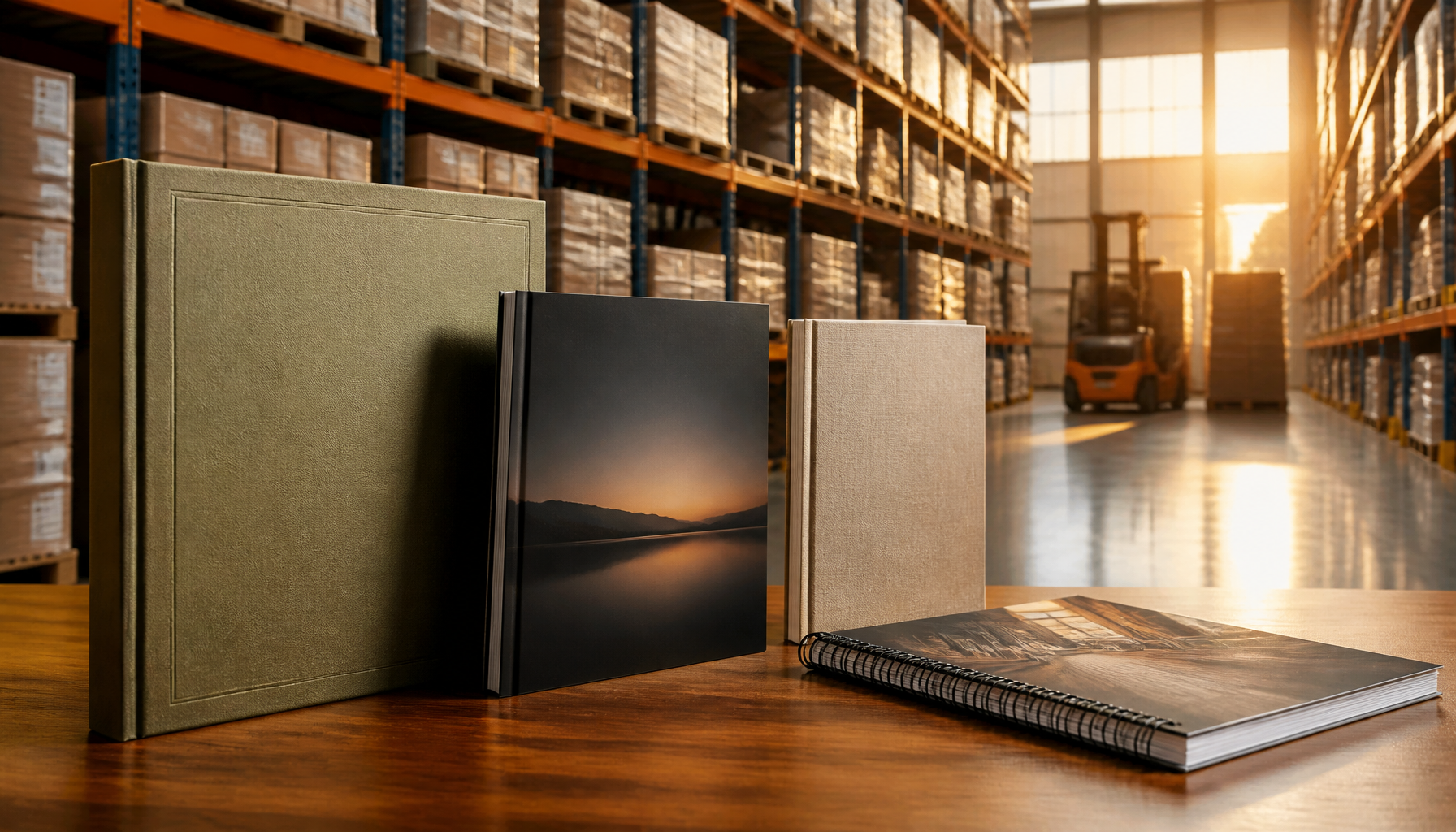
A proof is a real printed-and-bound sample of your book before the full run, so approving a bad proof means paying to reprint the whole order. LeadWorks recommends ordering a physical proof rather than a soft (screen) proof, because monitors can’t show paper texture, ink density, or true trim.
Fast manufacturers ship printed single-copy proofs within a few days; general industry practice, reflected by services like 48 Hour Books in 2026, is to bind a proof before committing to production. Check spine text alignment, gutter margins (inner space near the binding), and color on your actual paper stock.
How Long Does Production and Shipping Take?
Once you approve, offset presses need 7 to 15 business days to print, bind, and finish 1,000 books. Special processes, foil stamping, edge printing, deckled edges, add 2 to 5 days each.
| Stage | Typical Lead Time | What You Control |
|---|---|---|
| File prep | Your schedule | PDF/X, bleed, 300 DPI |
| Quote & setup | 1–2 days | Specs locked early |
| Proofing | 5–10 days | Fast approval turnaround |
| Printing & binding | 7–15 days | Fewer special finishes |
| Sea freight (overseas) | 25–40 days | Air cuts to 5–8 days |
Freight surprises most buyers. Ocean shipping from an overseas custom hardcover book manufacturer runs 25 to 40 days; air freight costs far more but arrives in about a week. Book air freight only if you’ve a firm launch date.
Frequently Asked Questions About Custom Book Manufacturing
Yes, you can print a single custom book, minimums start as low as one copy with digital printing, and hardcover runs about 40-60% more than softcover for the same title. Below are the direct answers to the questions buyers ask most before placing an order with a custom book manufacturer.
Can you print just one custom book?
Yes. Single-copy printing is standard practice in 2026. Some platforms support single-copy to 1,000+ copy print-on-demand orders, letting you upload a print-ready PDF and receive one bound book. A print-ready PDF means the file has correct bleed, embedded fonts, and CMYK color already baked in.
One caveat: a single copy uses digital printing, so the per-unit price is high. Expect to pay several dollars per book instead of the two-dollar range you get at volume.
What’s the minimum order quantity?
It depends on the printing method. Digital jobs often have no minimum, one copy is fine. Offset jobs typically require 300 to 500 copies, because the setup cost (plates and press calibration) only pays off across a large run.
- Digital / print-on-demand: 1 copy minimum, ideal for proofs and small launches
- Offset: 300-500 copy minimum, best unit economics above 1,000
- Special finishes (edge printing, foil): often need 100+ copies to justify tooling
How much does it cost to get a book made?
A 200-page 6″x9″ black-and-white paperback runs about $5.80 as a single copy, dropping to $2.15 per copy at 1,000 units in 2026. Color interiors, thicker paper, and larger trim sizes push those numbers up. Always request a printed proof before the full run, it catches color and binding errors that a screen PDF hides.
Why do hardcovers cost more than softcovers?
Hardcover (case binding) adds a rigid board cover, endpapers, and a separate case-making step. That extra material and labor typically adds 40-60% to the unit price versus a perfect-bound softcover of the same page count. For collector editions, LeadWorks recommends pairing case binding with edge printing, a decorative process it controls in-house, to justify the premium price point.
For a plain reading edition sold at scale, softcover keeps margins healthy. Reserve hardcover for gift books, textbooks, and titles where shelf life and perceived value matter more than cost.