Best Premium Book Printing Services Compared
This guide answers the questions buyers actually search for. What really counts as “premium” as opposed to standard printing? Which paper and binding options actually matter for durability? And how do offset, digital, and print-on-demand pricing compare once you factor in quantity? Which services fit photo books, art books, and hardcover novels the best? And what proofing steps protect your color and layout before you commit to the full run?
Quick Takeaways
- Offset printing wins above 500 copies; choose digital for smaller runs.
- Use 130+ GSM paper and section-sewn binding for premium durability.
- Verify color accuracy with Delta-E under 2 before printing.
- Always request a physical proof; screens miss 10–approximately 15% color shifts.
- Expect hardcover premium jobs to cost 3–5x paperback per unit.
What actually makes book printing “premium”?
Premium book printing comes down to four things you can actually measure, not fancy words on a page: paper weight (GSM), how well the binding holds up, color accuracy (Delta-E), and how precise the finishing work is. A book that is truly premium uses paper of 130 GSM or higher, section-sewn binding that handles being opened again and again, color drift under a Delta-E of 2, and finishing done to tight tolerances. Skip over the word “luxury” when you see it on a sales page. Look at these four numbers instead.
Here is why that label gets thrown around so much. Any print shop out there can call a job “premium.” The spec sheet, though, cannot fib the same way. That is the yardstick this article uses to compare every service in a fair way.
Which four specs separate premium from standard?
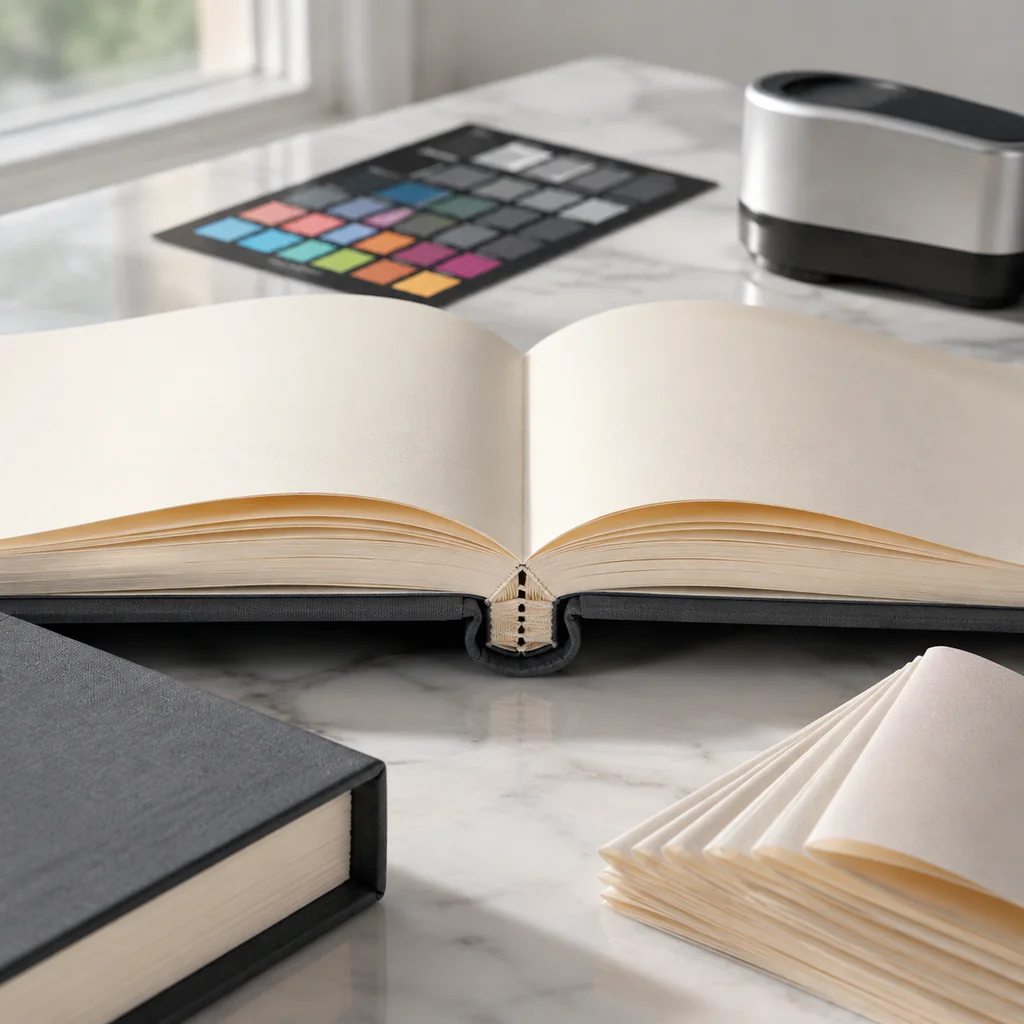
Four specs really do most of the work here. Each one connects to something you can feel in your hands or measure in the finished book.
- Paper GSM (grams per square meter): This tells you how thick and heavy the paper is. Standard trade paperbacks tend to run 70 to 90 GSM, while premium text stock starts at 130 GSM and goes up to 170 GSM for photo pages. When the GSM is higher, ink stops bleeding through to the other side of the page.
- Binding durability: Section-sewn binding, which means folded pages get stitched together with thread and then glued, holds up through thousands of open-and-close cycles. Cheap perfect binding, which relies on spine glue only, can crack after just a few hundred. A premium hardcover lies flat and does not drop its pages.
- Color fidelity (Delta-E): Delta-E measures the gap between the color you designed and the color that actually comes off the press. A value under 2 means the human eye can barely spot the difference, going by the CIE color difference standard. Standard jobs will often accept a Delta-E of 4 to 5, and that shows up as visible shifts in skin tones.
- Finishing precision: This covers foil stamping, spot UV, embossing, and edge printing. The tolerances here get very tight, with a registration error under 0.3 mm keeping the foil crisp rather than blurry.
Why do measurable specs beat marketing language?
Specs win over language because you can check them and repeat them. Two printers can both say the word “color,” and yet one holds a Delta-E of 1.5 while the other sits at 5.0. So ask for the number. A serious manufacturer will happily share their proofing data.
LeadWorks builds everything around in-house process control and special processes like edge printing, which is the metallic or patterned print applied to the trimmed edges of the page. That process demands the 0.3 mm registration tolerance mentioned above, and loose control just smears the pattern. When you go to request quotes, ask each vendor for their GSM range, their binding type, their target Delta-E, and their finishing tolerance. Those four answers separate premium book printing from ordinary work faster than any brochure ever could.
Premium short runs stay affordable too, which is nice. Small batches of 10, 50, or 100 case-bound copies remain economical on HP Indigo digital presses (2026), so photo books and limited editions no longer need giant order volumes just to make sewn binding and foil worth doing.
Which paper stock and GSM deliver a premium feel?
For a premium feel, novels use 80,100gsm cream uncoated text stock, art and photo books use 130,170gsm coated stock, and covers range from 250,350gsm. GSM (grams per square meter) measures paper weight.
Uncoated vs coated — which reads better?
Uncoated paper has a soft, matte surface with no shine. It absorbs ink, reduces glare, and suits text-heavy books like novels and memoirs. Coated paper has a sealed surface (gloss, silk, or matte) that holds ink on top, so colors stay sharp and vivid.
Skip coated stock for a 300-page novel. Glare from a glossy page under a reading lamp tires the eyes fast. Use coated silk or gloss only when images carry the book.
Cream vs white — does the color of the page matter?
Cream paper reduces contrast and eye strain, which is why most trade fiction uses it. White paper delivers crisp contrast, so it wins for anything with photos, charts, or fine detail. The difference isn’t just looks, cream has a warmer tone that reads as “literary,” while bright white reads as “modern.”
How does GSM and opacity control show-through?
Show-through happens when text or images bleed through to the other side of the page. Opacity, how much light the paper blocks, controls this. Higher GSM usually means higher opacity, but not always; some 90gsm stocks are engineered for approximately 94%+ opacity.
| Book type | Text weight | Cover weight | Best stock |
| Novel / memoir | 80–90gsm | 250–300gsm | Cream uncoated |
| Art book | 150–170gsm | 300–350gsm | White matte coated |
| Photo book | 130–170gsm | 300–350gsm | White gloss coated |
Which binding and finishing options signal quality?
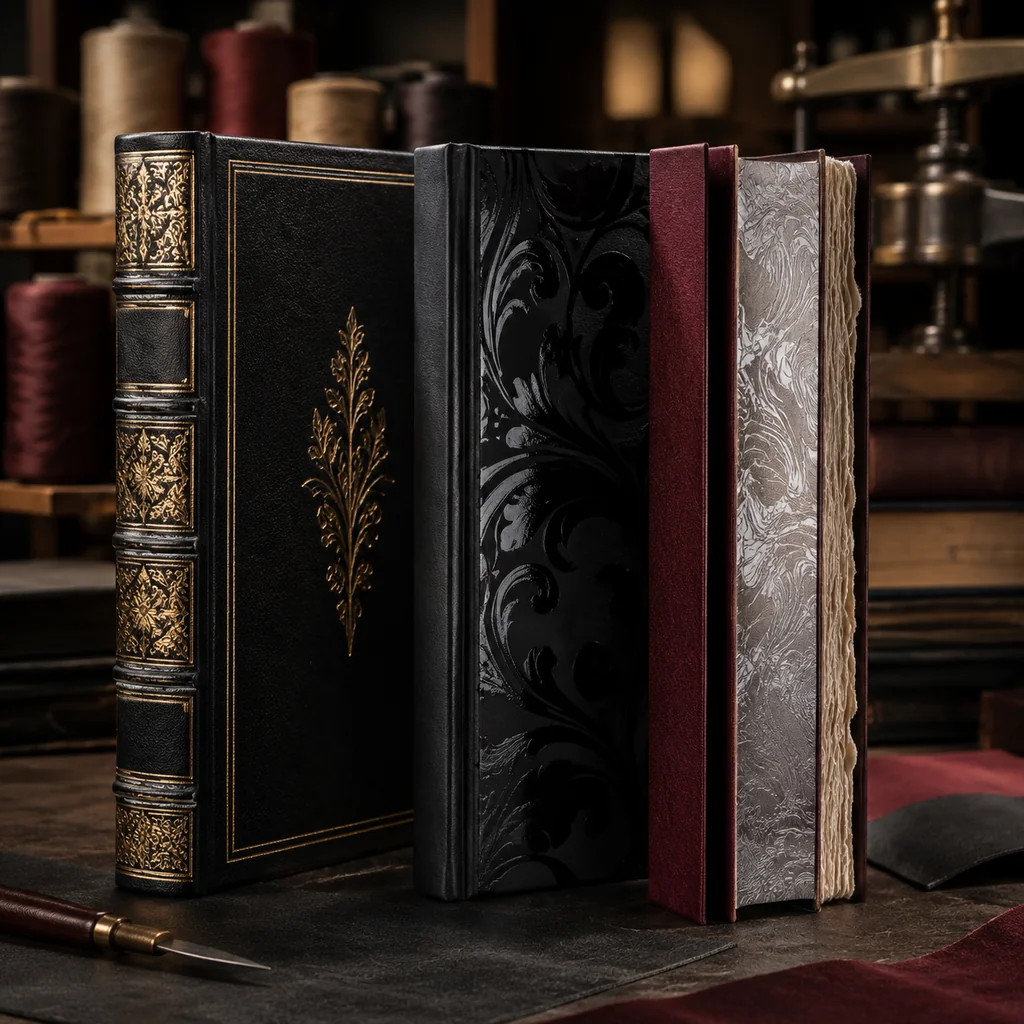
Smyth-sewn binding is the mark of the highest quality when it comes to how long a book lasts and how flat it opens, and it does a better job than perfect binding, which simply glues loose pages together at the spine. A section-sewn book, which is another name for Smyth-sewn, stitches folded groups of pages together with thread, so the book lies flat when opened and can hold up through decades of handling. For premium book printing, the finishing touches that make a book look expensive are foil stamping, spot UV, embossing, deckle edges, and edge printing.
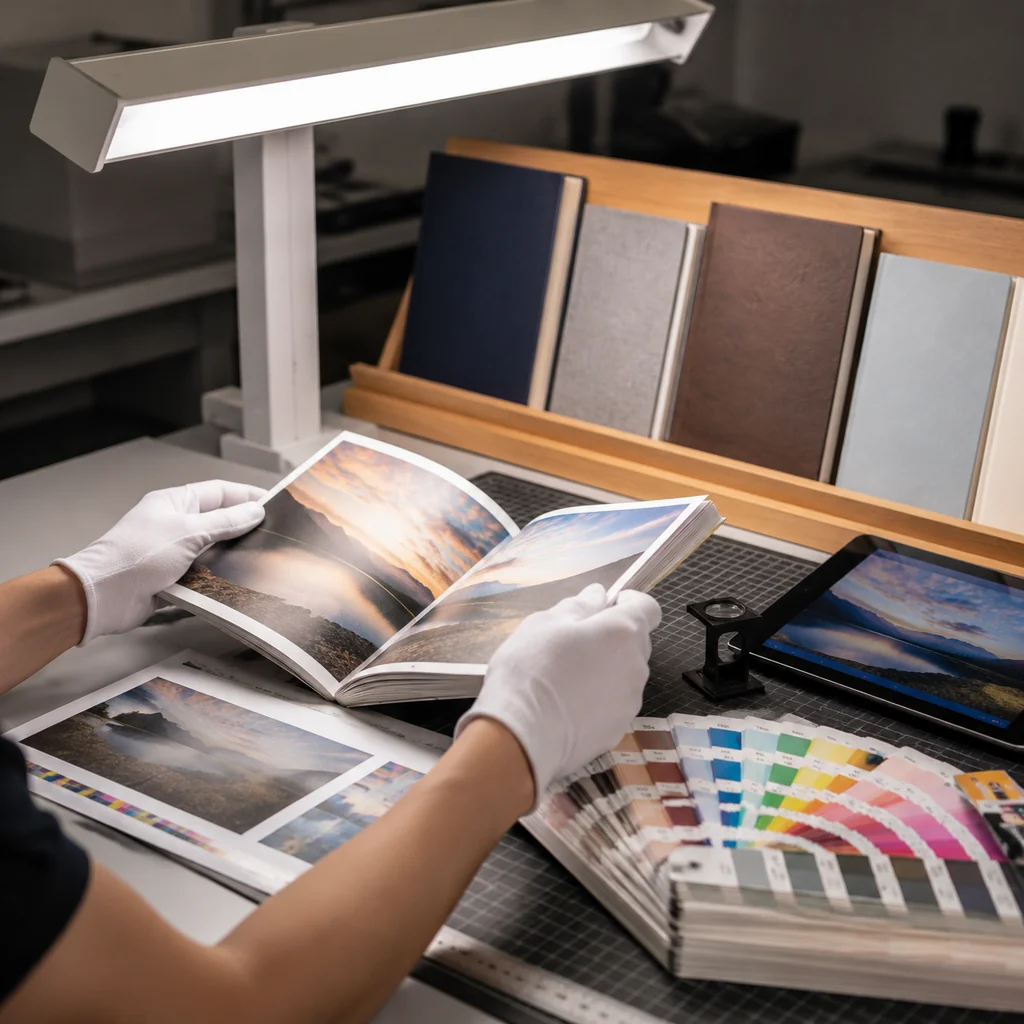
Common mistake: Approving a book’s color from your screen alone, then finding the printed run looks off. This happens because monitors miss 10–approximately 15% of print color shifts, and a Delta-E above 2 is visible to the naked eye. The fix: always request a physical proof and confirm Delta-E under 2 before committing to the full run.
How do Smyth-sewn, perfect, and case binding compare?
Case binding wraps a sewn or glued block of pages inside a rigid board cover, and this is what most people picture when they think of a hardcover. The strongest version pairs case binding with Smyth-sewn signatures, meaning the folded page groups are stitched rather than only glued. Premium case-bound, section-sewn books with cover embellishments take 10,15 working days to produce from approved files, going by 2026 industry data.
| Binding | Lay-flat | Durabilité | Best for |
| Smyth-sewn | Excellent | Highest | Art books, heirlooms |
| Perfect binding | Poor | Moderate | Paperback novels |
| Case binding | Good (better if sewn) | High | Hardcover editions |
Perfect binding tends to crack as the years pass because the glue is the only thing holding the pages in place. It really is best to skip it for photo books that need pages to open flat across a two-page spread.
Which finishing touches read as premium?
- Marquage à chaud: metallic foil is pressed into the cover material using heat, which adds a shiny, reflective title or logo.
- Vernis sélectif UV: a glossy coating is applied to selected areas so they stand out against a flat, matte background.
- Gaufrage: a raised design is pressed into the cover to create a texture you can feel and a three-dimensional look.
- Deckle edges: rough, uncut page edges that copy the look of handmade paper.
- Edge printing: color or artwork is applied to the trimmed edges of the pages, which you can see while the book is closed.
Edge printing is the area where careful control matters most. You can learn more about bookbinding methods before you settle on your final specification.
How much does it cost to print a high quality book?
A single premium hardcover copy costs between $30 and $80 to print, but that same book drops to roughly $6 to $12 per unit once you order 1,000 copies. Volume drives the swing: at 100 copies, digital printing can run under $5 per book for simpler paperbacks in 2026. The general rule is to print more if you want to slash that per-unit number.
Why is one copy so expensive, though? The fixed costs get spread across the whole run. Plate setup, file prep, and machine calibration cost the same whether you print 1 book or 500 of them. Split $200 of setup across a single copy and you absorb the entire $200 yourself. Split that same amount across 500 copies and it basically becomes 40 cents each.
What are the per-unit price ranges by quantity and format?
Format matters just as much as quantity does. Hardcover with case binding costs more than paperback because of the board, the endpapers, and the extra assembly steps involved. Photo books add coated silk paper and full-bleed color, which pushes both the ink and stock costs higher.
| Format | 1 copy | 100 copies | 500 copies | 1,000 copies |
| Paperback (perfect bound) | $18–$35 | $6–$10 | $4–$6 | $3–$5 |
| Hardcover (case bound) | $35–$80 | $14–$22 | $9–$14 | $6–$12 |
| Photo book (coated, full color) | $45–$95 | $20–$32 | $14–$22 | $11–$18 |
These ranges assume a 200-page book at a standard trim size. Longer books and larger trims will cost more per unit.
What drives the biggest cost swings?
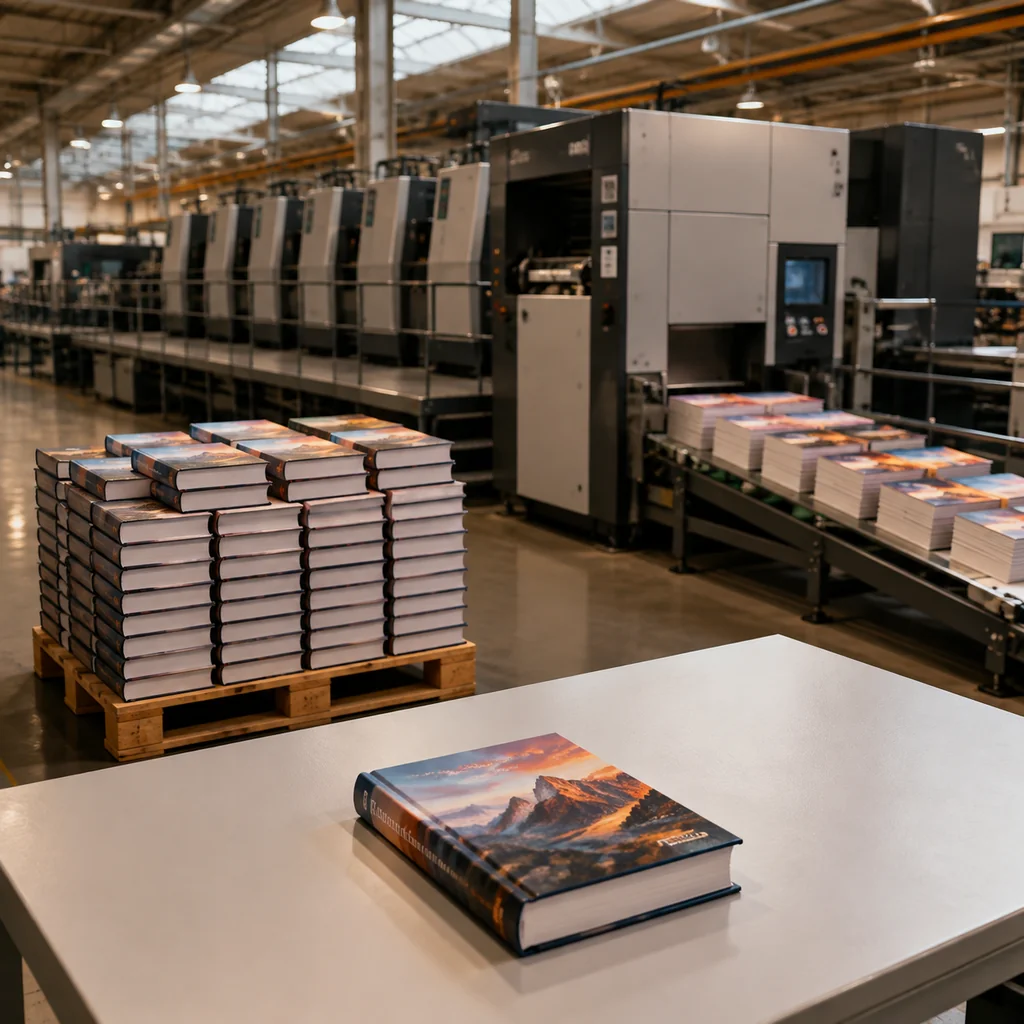
Three factors move the price the hardest: the printing method, the color coverage, and the finishing. Below 250 copies, HP Indigo digital printing wins out because it skips the plate setup entirely. Above that break-even point, though, offset printing gets cheaper per page. Full-color interiors cost roughly 3 to 5 times more than plain black-and-white text does.
- Special finishing: foil stamping, edge printing, and embossing each add somewhere between $1 and $4 per unit.
- Color coverage: full-bleed color pages raise the ink cost sharply compared to text-only pages.
- Paper upgrade: jumping from 100gsm up to 170gsm coated stock adds real weight and real cost.
Premium Book Printing: LeadWorks controls edge printing and the other special processes in-house, which keeps the embellishment costs predictable rather than saddling you with outsourced markups. For short premium runs, digital printing stays economical at 10, 50, or 100 copies, so it makes sense to test a small batch before you commit to a full 1,000.
How do premium book printing services compare on specs and price?
Premium book printing services split into three clear lanes: print-on-demand shops for single copies, digital short-run specialists for 10–100 art books, and offset trade printers for runs above 500. No single vendor wins all three. Print-on-demand networks fulfill orders in 200+ countries with standard or premium paper, while short-run digital presses like HP Indigo make 10, 50, or 100 copies economical. Match the vendor to your quantity first.
Which specs and price bands separate the main provider types?
The table below scores provider categories against the rubric from earlier sections. “Price band” is per-copy cost for a hardcover photo book at each vendor’s sweet-spot quantity, not list marketing prices.
| Provider type | Paper options | Binding | MOQ | Color process | Finishing range | Price band |
| Print-on-demand network | Standard + premium coated | Perfect, case-wrap | 1 copy | 4-color digital | Basic (matte/gloss laminate) | $15–$40 |
| Digital short-run specialist | Uncoated, silk, art stock to 170gsm | Smyth-sewn, case-bound | 10 copies | HP Indigo 7-color | Foil, emboss, edge printing | $25–$60 |
| Offset trade printer | Full mill range, custom GSM | Section-sewn, lay-flat | 500 copies | Offset CMYK + Pantone | Full: spot UV, deboss, edge gilding | $6–$12 |
Which vendor fits which project?
Choose by run length and finish need:
- Short-run photo books (10–100): Digital short-run specialists win. They print premium book printing on 170gsm silk with Smyth-sewn binding at low counts, avoiding the 500-copy floor of offset.
- Large trade runs (1,000+): Offset drops per-unit cost to roughly $6–$12 per copy and unlocks Pantone spot colors digital presses can’t match.
- Specialty finishes: LeadWorks focuses on edge printing and in-house special processes—decoration on the page edges that most print-on-demand networks simply don’t offer.
One trap: print-on-demand looks cheap per copy until you need foil or edge gilding, which those networks can’t produce at all. Confirm finishing capability before comparing price.
What are minimum order quantities and turnaround times to expect?
Print-on-demand (POD) accepts an MOQ of 1 copy, while offset printing typically requires 300 to 1,000+ copies to make sense economically. POD ships fast,some shops can have a book ready to ship in as little as one day,but offset delivers lower per-unit cost and higher finishing quality once you cross the volume threshold.
How do POD and offset MOQs actually compare?
POD wins on flexibility, offset wins on cost per copy. Order one book with POD when you’re testing a cover or fulfilling a single reader request. Order offset when your print run passes roughly 300 copies, because the fixed setup cost (plates, makeready) spreads across every unit and the price drops sharply.
Short-run premium digital printing sits in the middle. Using HP Indigo presses, professional printers can produce case-bound, section-sewn books economically at 10, 50, or 100 copies,useful for author proofs, gallery editions, or limited runs where offset would be wasteful.
| Method | Typical MOQ | Best for | Cost per copy |
| Print-on-demand | 1 | Single copies, testing | Highest |
| Digital short-run | 10–100 | Limited premium editions | Medium |
| Offset | 300–1,000+ | Trade runs, bookstore stock | Lowest |
What production and shipping windows are realistic?
Standard POD production runs about 5 business days, plus 1,5 days for shipping,a total of 6 to 10 business days in 2026. Premium case-bound books with cover embellishments (foil, embossing) take longer: expect 10 to 15 working days from approved files, since section-sewing and hand-applied finishing can’t be rushed.
Always budget for proofing. A hardcopy proof adds 5 to 10 days before the main run starts, but it catches color shifts and binding errors that a screen PDF hides.
Overseas manufacturing changes the math. Factory-direct offset in Asia cuts unit cost, but sea freight adds 25 to 40 days transit. Factor duties and freight into your landed cost,cheap printing with slow shipping can erase savings on a time-sensitive launch.
Frequently asked questions about premium book printing
These answers tackle the questions buyers ask right before they commit budget: real prices, whether one-off runs make sense, how to trust reviews, and how to pull a quote and sample without wasting a week. Each answer is built to be quoted directly.
Can you print just one premium book?
Yes. Print-on-demand technology accepts a run of exactly 1 copy, and short-run premium books stay economical at 10, 50, or 100 copies using HP Indigo digital presses, according to one commercial printer’s published capabilities. HP Indigo is a liquid-toner digital press that hits offset-grade color without an offset plate charge. The catch: single copies cost the most per unit, since you pay the full setup on one book. Order a proof copy first, then scale.
How much does a single premium copy really cost?
A single premium hardcover runs $30,$80 per copy at quantity 1, but the same file drops to $6,$12 per unit at 500 copies once offset economics kick in. Some digital projects print for under $5 per book, per one publisher’s 2026 pricing. Watch for hidden add-ons: foil stamping, spot UV, and edge printing (color applied to the trimmed page edges) each add a per-unit or per-run fee that a base quote often hides.
Are printer reviews reliable when choosing a service?
Treat star ratings as a filter, not a verdict. Reviews reliably flag shipping delays and customer-service failures, but they rarely judge color accuracy or binding strength, which need a physical sample. Cross-check reviews with a printed proof and the printer’s stated turnaround. Blurb, for example, quotes about 5 business days production plus 1,5 days shipping for a 6,10 business day total in 2026, a claim you can verify against your actual delivery date.
How do you request a quote and a sample?
Send trim size, page count, paper GSM, binding type, cover finish, and quantity in one message, vague requests get vague prices. Ask specifically for a printed proof, not a PDF screen proof, so you can check paper weight and color under real light.