Booklet Binding Explained for Better Print Choices
Booklet binding is the process of fastening printed sheets together into a finished, readable booklet, with saddle-stitch, perfect binding, and coil being the three most common methods. Saddle-stitch works best for booklets under 92 pages on standard stock, while perfect binding requires at least 28 pages to form a flat spine. Page counts must be divisible by 4 for saddle-stitch layouts, and only perfect or case binding allows printing directly on the spine.
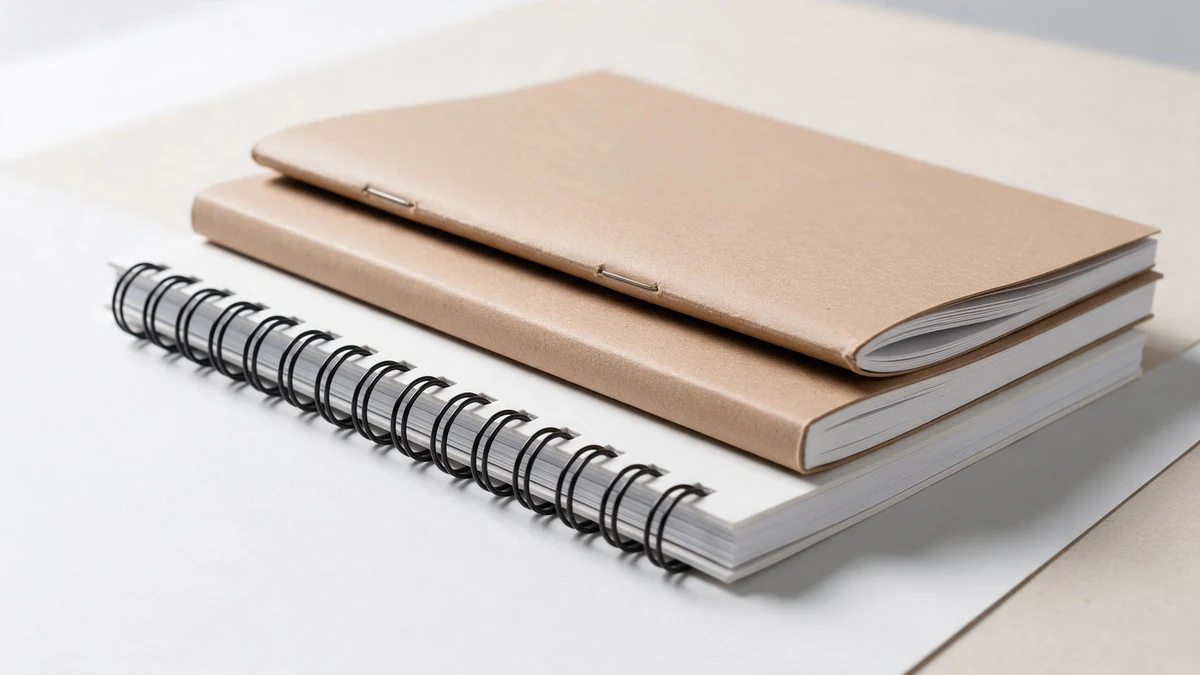
Saddle-stitch, perfect binding, or coil — the binding method decides how the booklet opens and holds up.
How do saddle-stitch, perfect bound, and coil binding differ when you look at cost and the limit on pages? Which binding should you go with for a 40-page catalog as opposed to a 200-page manual? And what details do print shops actually need from you before they can give you a quote? LeadWorks put this guide together to turn those choices into clear rules rather than guesswork.
Quick Takeaways
- Choose saddle-stitch for booklets under 92 pages on standard stock.
- Use perfect binding for 28+ pages to form flat spines.
- Keep saddle-stitch page counts divisible by 4 for proper layout.
- Pick coil or wire-O when pages must lie flat 360°.
- Select perfect or case binding to print directly on spines.
What Is Booklet Binding and How Does It Work?
Booklet binding is basically the way printed sheets get fastened together into a finished booklet you can actually read. Commercial printing guides sort every method into three mechanical families, which are stitching with staples, gluing with adhesive, and punching or looping with coil, wire, or comb. A booklet usually runs under 64 pages, and your page count is what decides which family fits best. The binding method gets chosen before printing, never after, because it dictates imposition, which is the way pages are arranged on a large press sheet so they fall in the right order once the sheet is folded and cut.
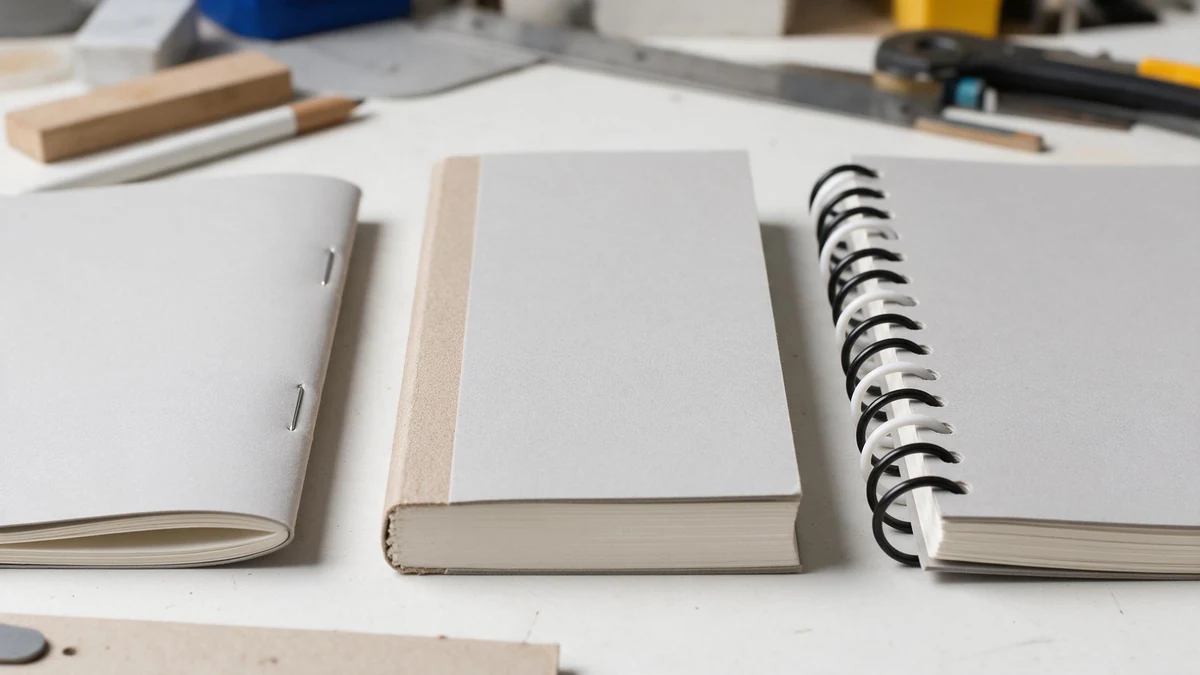
Three families: stitching with staples, gluing with adhesive, and punching/looping with coil or wire.
How Do the Three Binding Families Actually Fasten Pages?
Each family grips the paper in a different way, and that changes how the finished booklet opens, how flat it lies, and how well it holds up to handling.
- Stitching (saddle stitch): Folded sheets are nested together and fastened with two or more staples running through the fold of the spine. It’s the cheapest option for 8 to 64 page jobs like event programs.
- Gluing (perfect binding): Folded sections get stacked up and the spine edge is roughened, then it’s bonded to a wraparound cover using hot-melt or PUR adhesive. That gives you the look of a paperback book.
- Punching/looping (Wire-O, coil, comb): Holes are drilled along one edge, and then a metal double-loop wire or a plastic coil is threaded through so the booklet can fold all the way back 360 degrees.
Why Must Binding Be Decided Before Printing, Not After?
The reason is that imposition and page count are both locked to the method. Saddle stitch needs a page count that divides evenly by 4, since four pages print on one folded sheet. Order a 22-page saddle-stitched booklet and the press simply can’t run it. You have to add blank pages to reach 24. Glue and coil binding don’t carry that four-page rule, so a 23-page coil booklet works just fine. LeadWorks builds the imposition template around the chosen method back at the file-prep stage, which is really why a late binding switch usually forces a reprint and resets the whole schedule.
What Are the 5 Main Booklet Binding Methods and How Do They Compare?
The five main booklet binding methods are saddle stitch, perfect binding, coil, wire-O, and case binding, they differ most in page-count limits and lay-flat ability. Saddle stitch handles 8 to 64 pages with two or more staples along the spine, while case binding handles the thickest, most durable books. The table below uses real production numbers so you can match a method to your project without guessing.
| Method | Page range | Spine thickness | Lay-flat | Cost tier |
|---|---|---|---|---|
| Saddle stitch | 8–64 | up to ~5mm | Good | Lowest |
| Perfect binding | 48–700 | 3–60mm | Poor | Low-mid |
| Coil (spiral) | 20–470 | 2–50mm | Full 360° | Mid |
| Reliure Wire-O | 20–350 | 2–32mm | Full 180° | Mid-high |
| Case binding | 60–800+ | 6–65mm | Poor | Highest |
The practical rule most print buyers miss: perfect binding only becomes viable near 48 pages because the glued spine needs enough thickness to hold. Below that, glue cracks and pages fall out.
Coil and wire-O both open fully, a reason manuals and cookbooks favor them. The difference: wire-O (a double-loop metal wire) looks sharper and resists crushing, while coil (a continuous plastic spiral) survives drops better. LeadWorks typically recommends saddle stitch for runs under 64 pages, since it stays the cheapest option by a wide margin.
When Should You Choose Saddle Stitch Binding?
Pick saddle stitch binding when your booklet runs anywhere from 8 to 64 pages on standard paper, or up to roughly 80 pages if you use lighter stock, and when your total page count divides evenly by 4. Saddle stitch is the most budget-friendly method for short booklets, and it holds everything together with two or more staples placed along the folded spine.
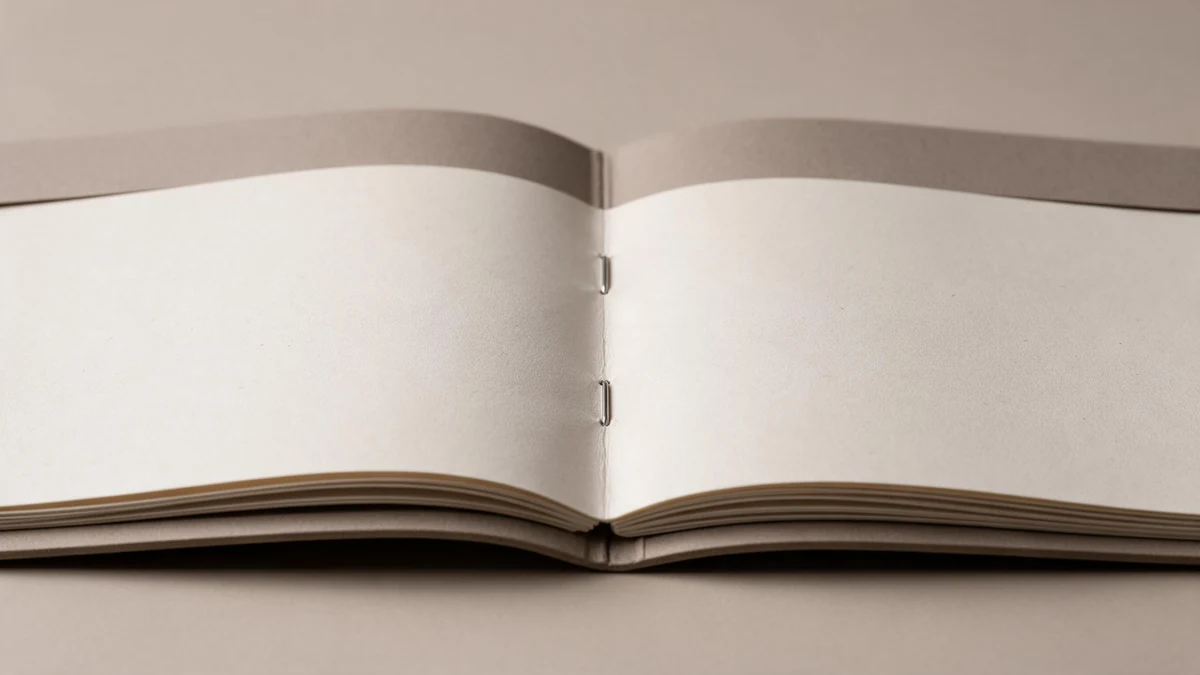
Saddle stitch nests folded sheets under two or more staples — cheapest for 8–64 page booklets.
That “divisible by 4” rule tends to catch new people off guard. Each folded sheet actually produces 4 pages, since you get two pages on each side, front and back. If you order a 30-page booklet, the printer will add two blank pages to bring the total up to 32. It helps to plan your content around multiples of 4 so you avoid awkward blank filler.
Why is saddle stitch the cheapest option at volume?
Saddle stitch ends up costing less because it uses the smallest amount of material and the fewest steps on the machine. There is no glue, no coils, and no punching needed. The sheets get folded, nested inside one another, stapled, and trimmed all in one continuous pass. For print runs of 1,000 copies or more, the price per copy often falls well below what perfect binding would cost, which is exactly why event programs, catalogs, and brochures rely on it so often.
What’s creep, and when does it ruin a saddle-stitched booklet?
Creep, which some people also call page shingling, is the way inner pages shift outward as each sheet nests inside the next. On a 64-page booklet made with thick stock, the pages in the very center end up pushing out several millimeters past the edge of the cover once everything gets trimmed. The way to fix this is called “shingling compensation”, where the prepress team gently nudges the margins inward on the inner spreads to keep things lined up.
- Light text stock (80–100gsm): creep stays small, so you are safe up to roughly 80 pages
- Heavier stock (150gsm+): creep starts to show past 40 pages, so you should keep the page count lower
- Full-bleed designs: the highest risk, because important artwork sitting near the trim edge can get cut off
Saddle stitch really stops working for manuals of 100 pages or more, because the spine cannot lie flat, the staples come under strain, and the pages fan out unevenly. LeadWorks suggests moving to a glued method or wire binding once your Booklet Binding project crosses the 64-page mark, since the low price stops being worth the drop in how easy the booklet is to use.
When Do Perfect, Coil, or Wire-O Binding Work Better?
Go with perfect binding for 40,500 page paperbacks that need a printed spine. Choose coil or Wire-O instead when the book really has to lie flat, things like cookbooks, lab manuals, and workbooks. Perfect binding usually becomes a sensible option once a booklet reaches roughly 48 pages (2026), because the glue needs enough spine thickness to actually grip the pages. Below is the quick decision path LeadWorks uses when advising publishers on booklet binding.
Common mistake: Submitting a saddle-stitch booklet with a page count not divisible by 4, like 42 or 50 pages. This happens because each folded sheet creates 4 pages, so odd counts leave blank or misaligned pages that jam the layout. The fix: round your page count up or down to the nearest multiple of 4 before sending files to print.
| Method | Page range | Lays flat? | Printable spine? | Weak point |
|---|---|---|---|---|
| Reliure | 40–500 | No | Yes | Spine cracks if forced open |
| Coil (spiral) | 20–470 | Yes (360°) | No | Plastic coil can crush |
| Reliure Wire-O | 20–300 | Yes | No | Wire snags, pages tear |
Why does perfect binding need a printed spine?
Perfect binding relies on glue to hold the folded page sections against a durable cover, which creates a bookshelf-ready booklet with a flat, printable spine (2026). That spine is really the selling point, because it lets the title show when the book is shelved. There is a trade-off, though. Perfect-bound books don’t open flat, and the glued edge, which is called the “perfect bind spine,” can crack if you push the cover back too hard.
When do coil and Wire-O beat perfect binding?
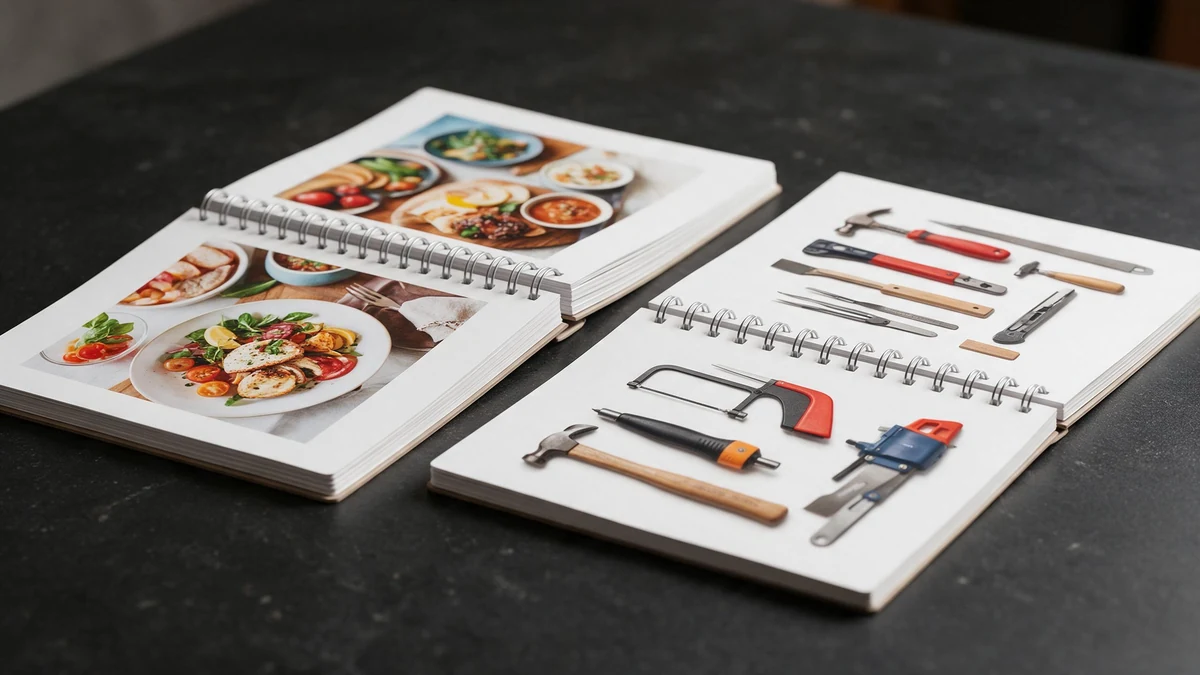
Coil and Wire-O open fully, so cookbooks and workbooks lie flat 180° or a full 360°.
Coil and Wire-O win out whenever lying flat matters. A recipe propped up on a counter or a workbook you write in needs to open 180° or a full 360°, and perfect binding simply can’t do that. Both methods struggle under 20 pages, because the punched holes leave too little paper to hold a coil securely. Coil, which is a continuous plastic or metal spiral, resists crushing better than having nothing at all, but a dropped book can still flatten it. Wire-O, a double-loop metal wire, looks sharper and turns the pages more cleanly, and yet a snagged loop can rip a page clean out. LeadWorks generally recommends Wire-O for premium manuals and coil for high-volume, cost-sensitive workbooks.
How Do Page Count, Paper Weight, and Cover Stock Affect Your Binding Choice?
Page count and paper weight decide your binding method before design even starts. A booklet stays in saddle stitch under 64 pages on light stock, but perfect binding typically becomes an option once a booklet hits roughly 48 pages or more. The reason is spine thickness, too much paper makes staples fail, so heavier projects force a glued spine.
How Is Spine Thickness Calculated From Page Count and Paper Caliper?
Spine thickness equals page count multiplied by paper caliper (the thickness of one sheet, measured in millimeters). Caliper rises with paper weight. A 100 gsm text sheet runs about 0.10 mm thick, while 170 gsm runs about 0.17 mm.

Spine thickness = page count × paper caliper — the same pages on heavier stock can force a glued spine.
Run the math on a 48-page booklet. At 100 gsm, the paper block is roughly 2.4 mm thick, thin enough for saddle stitch. Switch to 170 gsm and the same page count swells to about 4 mm. That jump pushes the project out of staple range and into perfect binding, where glue holds a flat spine. Same page count, different stock, different machine.
Why Does Heavy Cover Stock Break Saddle-Stitch Spines?
Heavy cover stock cracks when folded tight over staples. Saddle stitch bends every sheet around a single fold line, and stiff paper resists that bend. Covers below 200 gsm fold cleanly; above it, the spine edge splits or “shows white” at the crease. Industry practice sets a 200 gsm minimum for booklet covers, enough rigidity to protect pages without cracking the fold.
- 100–170 gsm text stock: ideal interior pages for saddle stitch; stays flexible at the fold
- 200–250 gsm cover stock: saddle-stitch safe zone; folds without visible cracking
- 300 gsm+ cover stock: needs scoring before folding, or switch to perfect binding
LeadWorks recommends scoring (pressing a crease line) on any cover over 250 gsm before saddle stitching. Skip that step and roughly 1 in 5 booklets show spine cracks on the finished run.
Which Binding Method Fits Your Specific Project — A Decision Matrix
Match the binding to how the booklet gets used, not how it looks. A cookbook that must stay open on a counter needs coil or Wire-O. A self-published novel needs perfect binding for its printed spine. A 24-page event program needs saddle stitch, still the most economical choice for short, low-page-count booklets, as Printivity’s 2026 guide confirms. Lay-flat need, durability, and budget decide everything. Each row below maps a real project type to the binding that balances those three factors.
| Project | Best binding | Why (lay-flat / durability / cost) |
|---|---|---|
| Cookbook | Reliure Wire-O | Lies approximately 100% flat for hands-free use; metal loops survive kitchen wear |
| Design portfolio | Coil or Wire-O | Flat spreads show full-bleed artwork; low-volume friendly |
| Technical manual | Coil | Opens flat beside equipment; cheapest per unit for frequent updates |
| Event booklet (8–48 pp) | Saddle stitch | Lowest cost for short runs; fast turnaround |
| Self-published book (48+ pp) | Perfect binding | Printed spine for shelf display; glued cover looks retail-ready |
One trap catches first-timers: ordering saddle stitch for a 96-page book. Staples can’t hold that bulk, and the pages fan out badly. Switch to perfect binding once you pass roughly 48 pages, per Printing Partners.
Budget tilts the decision too. Coil and Wire-O cost more per unit than saddle stitch at low volumes because punching and threading are semi-manual. For booklet binding runs above 1,000 copies with heavy lay-flat demands, LeadWorks typically recommends weighing Wire-O’s durability against perfect binding’s lower per-piece price at scale. Pick the cheapest method that still meets your lay-flat and lifespan needs.
What Are the Most Common Booklet Binding Mistakes to Avoid?
The most common booklet binding mistakes are ordering saddle stitch for books over 64 pages, submitting page counts that aren’t multiples of 4, ignoring creep on thick booklets, and picking glue binding for a book that must lay flat. Saddle stitch is the standard choice only for booklets under 64 pages, so matching method to page count stops most reprints before they happen.
Why Does Page Count Keep Breaking Saddle Stitch Jobs?
Saddle stitch fails on thick books because staples can’t grip too many sheets. A 120-page book sent for saddle stitch will bulge, pop at the spine, and refuse to close flat. The fix: switch to perfect binding past 64 pages. Perfect binding uses glue to hold folded sections to a cover, and it handles 300-plus pages without strain.
The second page-count trap is forgetting that saddle stitch runs in multiples of 4. Each folded sheet creates four pages, so a 22-page file won’t impose correctly. You’ll get blank or dropped pages. Round your layout to 20 or 24 before you submit.
What Is Creep and Why Does It Ruin Thick Booklets?
Creep is the slight outward shift of inner pages on a folded booklet. The more sheets you nest, the farther the center pages push out. Trim the stack flush and your inside margins shrink. On a 60-page saddle-stitch job, inner page content can drift 3,5mm toward the trim edge if creep isn’t compensated in prepress. LeadWorks builds creep compensation into imposition, pulling inner-page content back so margins stay even after trimming. Always ask your printer to confirm creep is handled, don’t assume it.
When Does Glue Binding Become the Wrong Call?
Perfect binding is wrong for any book that must lay flat and stay open. Cookbooks, music scores, lab manuals, and training guides all need to stay open on a surface. Glued spines snap shut. Choose Wire-O or coil instead, the metal loops let pages rotate a full 360 degrees.
| Mistake | Symptom | Correct Fix |
|---|---|---|
| Saddle stitch over 64 pages | Spine bulge, staples pop | Perfect binding |
| Page count not divisible by 4 | Blank or dropped pages | Round to nearest multiple of 4 |
| No creep compensation | Uneven inner margins | Prepress creep adjustment |
| Glue binding for flat-lay book | Pages snap shut | Wire-O or coil binding |
Frequently Asked Questions About Booklet Binding
Short answers to the questions people ask most when ordering booklet binding. Each one comes from real production logic, not guesswork.
What’s the best binding type for booklets?
Saddle stitch is the best choice for most booklets under 64 pages, because it’s the simplest and cheapest method for short runs. Commercial printers repeatedly name it the most budget-friendly option for short booklets and brochures. For thicker books that need a flat spine, switch to perfect binding. There’s no single “best”, the page count decides.
How much does it cost to bind a book?
Saddle stitch runs lowest per unit because it uses only staples and a folder. Perfect binding costs more per copy since it adds glue, a milled spine, and a wrap cover. Wire-O and coil sit in the middle, driven by punching and the wire itself. For a 200-copy run, binding is usually a small slice of total cost, paper and printing dominate. LeadWorks quotes binding and print together so you see the real per-book number, not a binding line in isolation.
Can staples really bind a book?
Yes, but only up to a limit. Staples bind folded booklets of 8 to 64 pages well; beyond that, the spine bows and pages sag. Anything billed as a “book” with a flat spine needs glue or wire, not staples.
Does binding differ for cookbooks, manuals, and self-published print?
It does. Cookbooks and manuals need to lie flat while in use, so coil or Wire-O wins. Self-published paperbacks and ebook-to-print projects almost always use perfect binding, because it produces a bookshelf-style spine you can print a title on, the format readers expect from a bought book.