How Commercial Book Printing Companies Really Work
A commercial book printing company converts digital files into bound books at scale, using offset presses for large runs and digital presses for smaller ones—operating as a factory chain rather than a local copy shop. Print-on-demand players like Lulu run global networks that print full-color and black & white books, shipping to 200+ countries and territories (2026). Offset printing drops below approximately $0.02 per page past 1,000 copies, while digital printing needs zero setup plates, making it ideal for runs under 500 books.
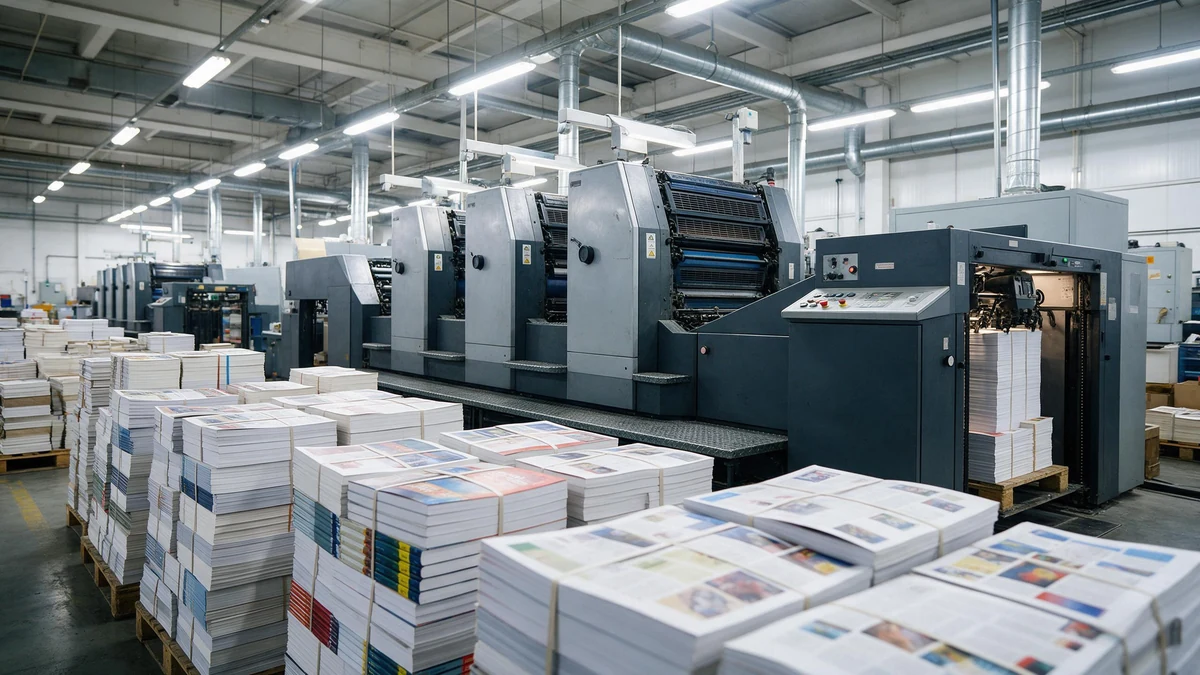
Commercial book printing turns digital files into bound books at scale — a factory chain, not a copy shop.
Essentially, these firms take your digital files and turn them into bound books at scale, relying on either offset presses when the runs are large or digital presses when the runs are small. The way LeadWorks looks at it is fairly straightforward, you pick the printing method that fits your quantity, and then you negotiate the paper and the binding from there.
This guide sets out to answer a few things. How is a Commercial Book Printing Company different from your local copy shop? What are the core parts that make up the printing process? And how do offset and digital printing stack up against each other? Which specifications end up affecting the price you pay?
And how do you go about picking the right vendor for the job?
Quick Takeaways
- Offset printing wins below approximately $0.02 per page past 1,000 copies.
- Digital printing skips setup plates, making it ideal under 500 books.
- Paper weight (GSM), binding type, and trim size drive most costs.
- Print-on-demand ships to 200+ countries with no minimum order.
- Turnaround runs 5–15 business days depending on run size.
What Is a Commercial Book Printing Company and How Is It Different from POD?
A commercial book printing company makes books in large quantities, usually 250 copies or more for each order, using industrial offset or high-speed digital presses. This is different from print-on-demand, often called POD, which prints just one copy at a time whenever a buyer places an order. Bulk printing brings your cost per book down sharply as the quantity goes up. A 1,000-copy commercial run can actually cost half or less per book than a single POD unit, because the plate setup and the press preparation get spread out across the whole run.
POD networks give up that savings in exchange for having zero inventory risk. Lulu, for example, runs a print-on-demand network that ships to 200+ countries and territories with no minimum order at all.
How does the workflow differ from a copy shop?
A commercial run moves through prepress first. Prepress is basically the stage where your PDF gets checked for bleed, resolution, and color separation before a press ever touches the paper. Copy shops skip most of this and simply print your file the way it is. Commercial printers like LeadWorks handle all of this in-house, catching something like a low-resolution cover image or a missing 3mm bleed before it turns into 5,000 flawed copies.
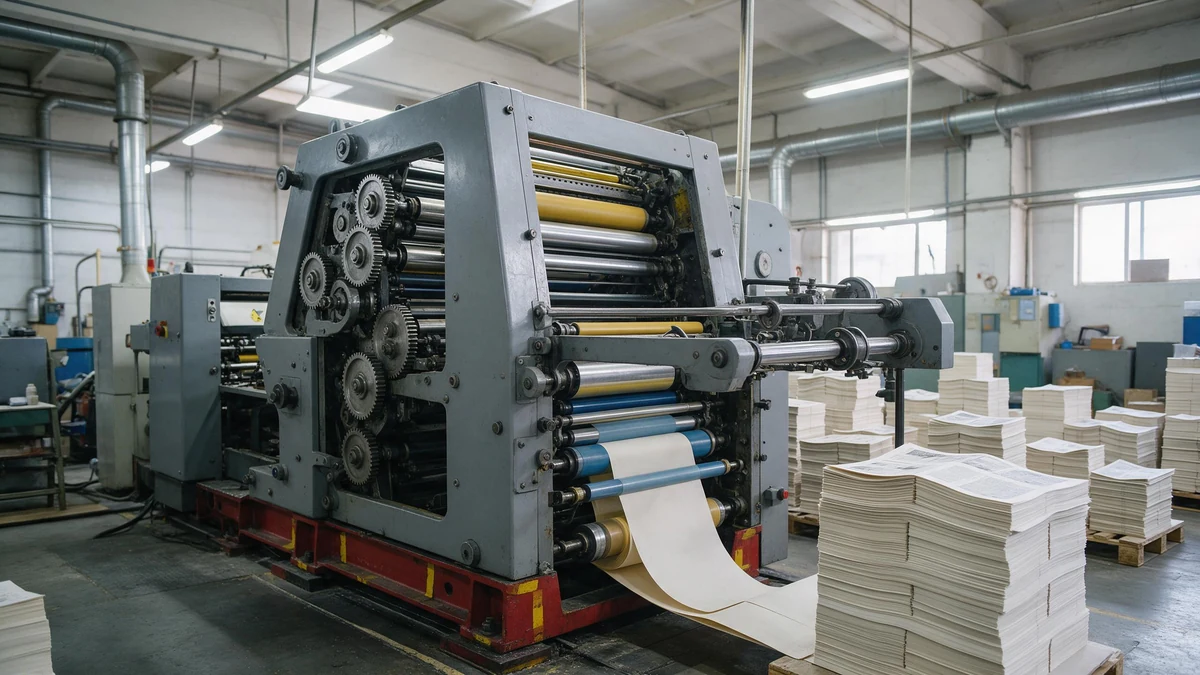
Seven stages — prepress, plates, printing, folding, binding, trimming, and QC — move an order through the plant.
After prepress comes the plate making for offset, then printing, folding, binding, and trimming. That whole chain is why commercial jobs take longer than a copy shop’s same-day counter, though some facilities do move quite fast. BookBaby says most of its book printing finishes in 3 to 5 days inside its own plant.
Who actually needs a commercial printer instead of Blurb?
You need a commercial book printing company when you sell in volume, meaning publishers stocking distributors, brands running catalogs, or authors with a launch that demands 500 copies or more. Self-serve platforms like Blurb are a good fit for photo books, single gifts, or small test runs. Pick POD when you cannot predict how much demand there will be. Pick commercial when you need a low cost per book and consistent binding across a large batch.
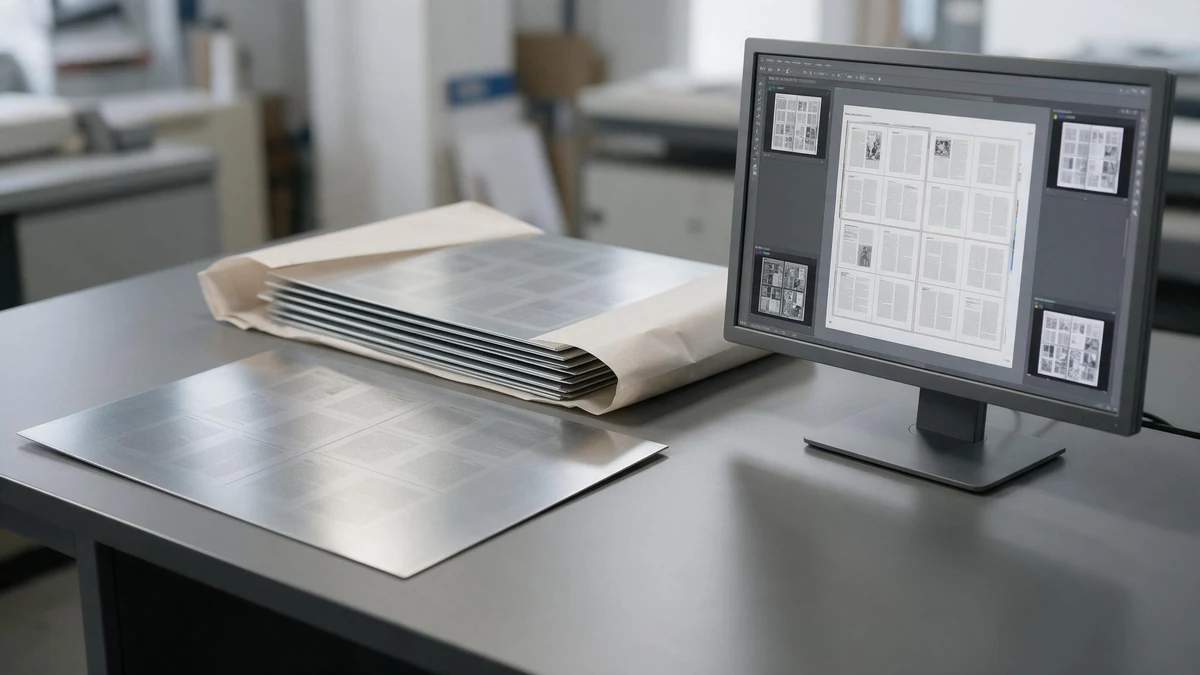
Prepress checks bleed, resolution, and color; imposition arranges pages so a folded sheet reads in order.
How Does a Commercial Book Print Order Actually Move Through the Factory?
A commercial book print order moves through seven core stages: prepress, plate-making or RIP, printing, folding, binding, trimming, and quality control. Bulk offset runs typically take 5 to 15 working days once files are approved. Keeping every stage under one roof lets a printer catch registration or binding errors before they multiply across thousands of copies.
What Happens in Prepress and Plate-Making?
Prepress prepares your files for the press, and two jobs matter most. First, imposition, arranging pages so they fall in correct order after a large sheet is folded. A standard 16-page signature (a folded sheet section) must line up perfectly, or page 5 ends up upside down next to page 12. Second comes plate-making for offset or RIP (Raster Image Processing) for digital, which converts your PDF into printable dots the machine understands. A single imposition mistake caught here costs minutes to fix; caught after printing, it can scrap an entire 3,000-copy run.
Why Does Keeping Binding In-House Cut Defect Rates?
Because outsourced binding adds a handoff, and handoffs are where books get damaged. When a bookbinding vendor sits in another building, printed sheets travel, wait in queues, and pass between two quality standards instead of one. LeadWorks runs printing, folding, binding, and special finishes like edge printing inside one facility. That matters for tricky work: edge printing (applying color or images to the trimmed page edges) must align with the trim within fractions of a millimeter, if the trimmer and the edge station follow different specs, the design smears.
- Folding: Sheets fold into signatures; misfolds here ripple into every later stage.
- Binding: Perfect binding, sewn, or case binding attaches the block to the cover.
- Trimming: A three-knife cutter squares all copies to final size, often within 0.5mm tolerance.
- QC: Inspectors pull samples for ink density, page order, and glue strength.
For comparison, some print-on-demand networks complete a single book in 3 to 5 days (2026). Bulk offset trades that speed for lower per-unit cost and tighter control across the full run.
Offset vs Digital vs POD — Which Print Method Fits Your Run Size?
Offset wins for runs above roughly 500,1,000 copies, digital dominates 50,500 copies, and print-on-demand (POD) only makes sense for one-off or on-demand orders. The crossover point is the number where offset’s cheap per-unit price finally beats its high setup cost. Below that number, you overpay on offset plates. Above it, POD’s per-book price bleeds you dry.
Common mistake: Ordering 300 books on offset presses to chase the “sub-$0.02 per page” rate. This happens because buyers see the low per-page cost but ignore the plate setup fees, which only amortize past 1,000 copies. The fix: use digital printing for runs under 500—zero setup plates means you skip the fixed costs that make small offset runs far more expensive per book.
Why does offset get cheaper as your order grows?
Offset printing spreads a fixed setup cost across every copy. It requires metal plates and press makeready, which can run several hundred dollars before a single book prints, but once the press rolls, the marginal cost per book drops fast: print 2,000 copies and that setup fee splits into pennies per unit. Digital skips plates entirely, so setup is near-zero and it’s ideal for short runs. The catch: digital toner or inkjet costs more per page than offset ink at volume.
When does POD actually make sense?
POD prints one book at a time, only after a customer orders it, so there’s no inventory and no upfront run. Networks like Lulu’s global POD service dropship to customers in 200+ countries. The trade-off is brutal per-unit pricing, often 2 to 4 times higher than a bulk offset unit. Use POD for test runs, backlist titles, or self-published books with unpredictable demand.
| Method | Best run size | Setup cost | Per-unit economics |
| Offset | 500+ copies | High (plates + makeready) | Lowest at volume |
| Digital | 50–500 copies | Near zero | Moderate, flat per copy |
| POD | 1–50 copies | None | Highest per book |
LeadWorks steers clients past the false economy of picking a method by habit. If your run sits near the crossover, request a quote for both offset and digital, the true break-even shifts with page count, color, and binding.
What Is the Average Cost to Have a Book Printed?
A standard 200-page, 6″×9″ black-and-white paperback runs roughly $4.50,$6.00 per copy at 250 units, then drops down to $2.80,$3.80 at 1,000 units, and falls under $2.00 per copy at 5,000 units when you go with offset. Hardcover adds another approximately $2,$4 per book on top of that.
The single biggest thing that moves the price is quantity. Doubling your run rarely doubles the cost, because the plate and setup fees end up spread across more units, so each copy carries a smaller share of that fixed expense.
What are the real per-unit price tiers by method and quantity?
Print-on-demand (POD) charges no setup fee, but it does carry the highest unit price, since each book gets made one at a time. That’s really why Lulu’s global POD network, which ships to over 200 countries, suits authors printing dozens rather than thousands.
| Method | 250 copies | 500 copies | 1,000 copies | 5,000 copies |
| POD paperback | $5.50 | $5.50 | $5.50 | $5.50 |
| Digital paperback | $4.80 | $4.20 | $3.60 | n/a |
| Offset paperback | $5.20 | $3.60 | $2.90 | $1.80 |
| Offset hardcover | $8.90 | $6.40 | $5.10 | $3.40 |
These figures are U.S.-market estimates for a 200-page trade book, and they shift around with paper prices, which climbed sharply after the 2022 pulp shortages.
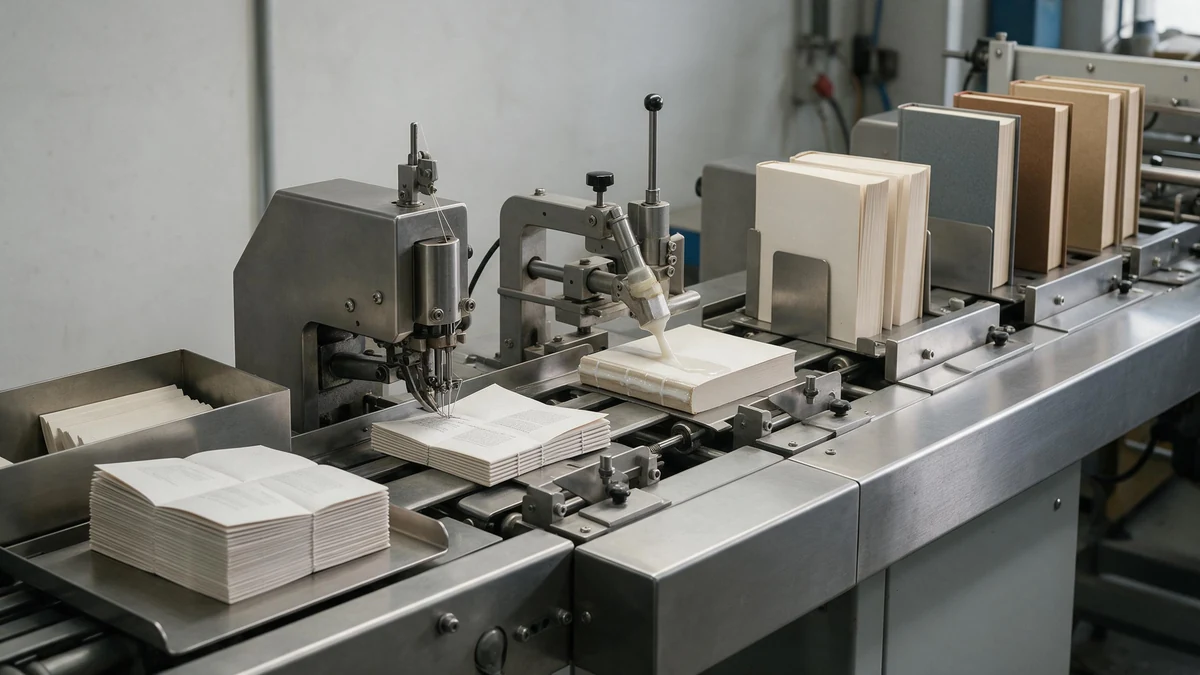
Saddle-stitch, perfect, case, or Smyth-sewn — binding decides durability and page-count limits.
Which factors actually drive your final quote?
- Page count: this is the primary cost. Every 32 pages adds one signature, which is basically a folded printed sheet, so a 320-page book costs far more than a 160-page one.
- Trim size: larger pages simply use more paper. An 8.5″×11″ cookbook costs 40–60% more per page than a 5″×8″ novel does.
- Paper stock: 80gsm uncoated is the cheapest option, while coated art paper for photos adds $0.30–$0.70 per book.
- Color vs black-and-white: full-color interiors can triple the page cost when compared against plain mono text.
- Binding: perfect binding, which is a glued spine, is the standard choice, while case binding with hardcover boards adds the largest single premium.
You really shouldn’t stop at the print cost alone. The landed cost also includes freight, duties, and warehousing. A good Commercial Book Printing Company like LeadWorks recommends adding 12,18% for ocean freight on overseas offset runs, plus the proofing fees on top. A cheap unit price means very little if shipping a pallet from Asia ends up erasing all of the savings.
Hardcover vs Paperback — Which Binding Should You Choose for a Bulk Run?
Choose perfect binding for most paperbacks under 500 pages, saddle-stitch only for booklets under 64 pages, and case binding (hardcover) when the book must survive years of handling. Hardcover typically costs 2,4x more per copy than a paperback of the same page count, so reserve it for reference works, gift editions, and premium titles where shelf life justifies the premium.
What are the four main binding methods and how do they differ?
Binding is how the pages get held together. Each method has a page-count ceiling and a durability tradeoff. Get this wrong and pages fall out, or the spine cracks on first open.
- Saddle-stitch: Folded sheets stapled through the spine. Cheapest option, but fails above 64–80 pages because the fold bulges and won’t lie flat. Good for programs and thin catalogs.
- Perfect binding: Pages glued to a paper cover with hot-melt or PUR adhesive. Works from 32 to about 500 pages. The default for novels and trade paperbacks.
- Case binding: Signatures glued into a rigid board cover. This is standard hardcover — durable, but adds cost and weight.
- Smyth-sewn: Signatures stitched with thread before casing in. The strongest method; the book lies flat and survives decades. Used for archival and high-end editions.
When is a hardcover’s 2–4x cost actually worth it?
Hardcover earns its premium when the book gets opened hundreds of times or sits on a retail shelf competing on perceived value. Smyth-sewn binding resists spine cracking that glued perfect binding suffers at high page counts. For a 400-page textbook or cookbook, PUR perfect binding holds up; for a 700-page reference title, glue-only spines start failing, so case binding or Smyth-sewn becomes the safe call.
| Binding | Page range | Cost vs paperback | Erscheinungsbild |
| Saddle-stitch | 8–64 | 0.5x | Low |
| Perfect (PUR) | 32–500 | 1x baseline | Medium |
| Case bound | 60–800 | 2–3x | High |
| Smyth-sewn | 100–1,000+ | 3–4x | Highest |
What special finishing can a printer add to a binding?
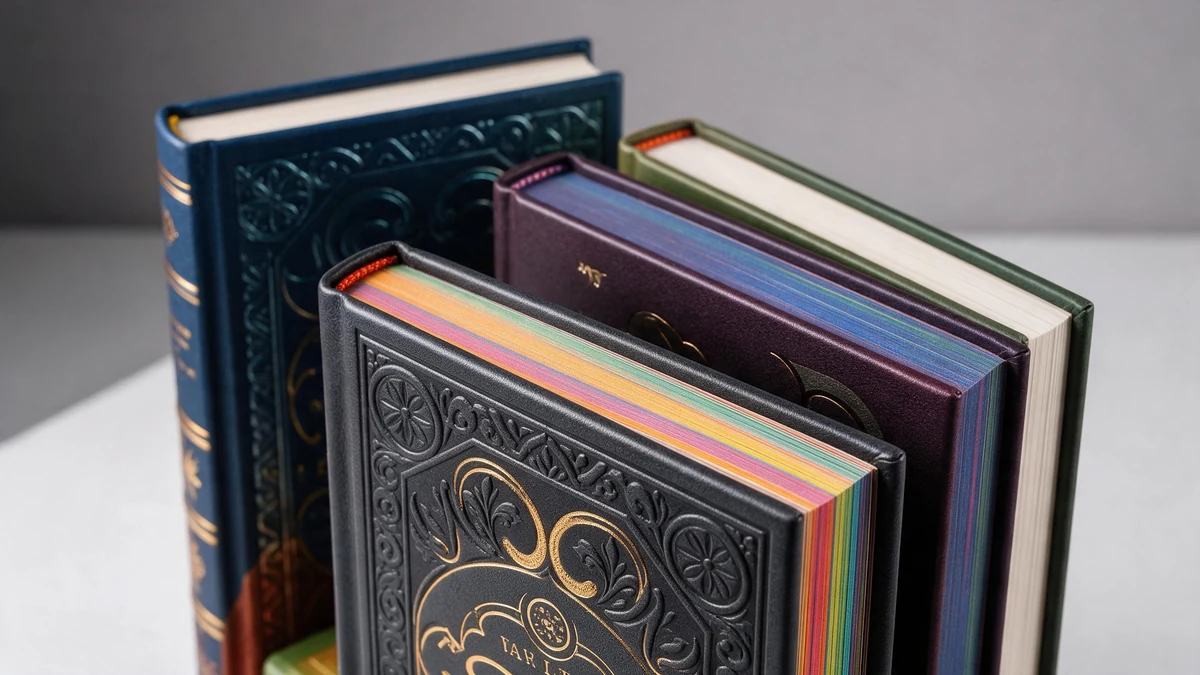
Edge printing, foil stamping, and embossing turn a plain block into a display piece.
Edge printing, coloring or printing designs on the trimmed page edges, turns a plain block into a display piece. It demands tight registration and is a specialty a Commercial Book Printing Company like LeadWorks runs in-house rather than outsourcing, alongside foil stamping and head-and-tail bands. Keeping it in-house avoids a second shipping leg and the color-drift that happens when edge work moves between vendors.
Frequently Asked Questions About Commercial Book Printing
These four questions come up in nearly every quote request. Short, direct answers below, built for people who need a decision, not a lecture.
What Is the Cheapest Way to Print Books in Bulk?
Offset printing at 1,000+ copies is the cheapest way to print books in bulk, because the fixed setup cost spreads across more units. A 200-page paperback that costs $5.50 per copy at 250 units can drop below $2.50 per copy at 2,000 units. To push cost lower, standardize your trim size to 6″×9″, pick a house paper stock, and order in round numbers that match the press signature (usually multiples of 16 pages).
Do I Need a Commercial Printer for a Single Book?
No. For one copy or a handful, use print-on-demand instead. POD services like Lulu ship single books to customers across 200+ countries with no minimum. A commercial book printing company sets up presses and dies for volume, so a single-book order there would cost far more per unit than the retail price of the book itself.
Are Small Print Runs of 100–300 Copies Worth It?
Yes, if you use digital printing rather than offset. Digital carries almost no setup fee, so 100,300 copies stay economical. Turnaround is fast too, most digital jobs finish in 3,5 days at an in-house facility. Skip offset at this quantity; the plate and makeready cost would swamp your per-book price.
How Do I Brief a Printer Accurately?
A tight brief prevents reprints. Include these six specs every time:
- Trim size: exact finished dimensions, e.g. 6″×9″
- Page count: rounded to a multiple of 4 (ideally 16)
- Paper stock: weight and finish, e.g. 80gsm uncoated cream
- Binding: perfect bound, saddle-stitch, or case bound
- Color: black-and-white interior, or CMYK 4-color
- Files: press-ready PDF/X-1a with 3mm bleed and embedded fonts
LeadWorks reviews these against a preflight checklist before quoting, which catches missing bleed and low-resolution images early, the two errors that cause most first-run delays.
Choosing the Right Printing Partner for Your Book Project
Pick a partner by matching five factors to your project: run size, binding type, turnaround, minimum order quantity (MOQ), and true landed cost. The right commercial book printing company aligns with your volume tier, offset shops shine above 500 copies, while print-on-demand networks like Lulu’s ship to 200+ countries with no minimum. Choose based on numbers, not sales pitches.
What Should Your Vendor Checklist Cover?
Score every quote against the same six lines. This stops vendors from hiding costs in different places.
- Run size fit: Confirm the shop’s sweet spot matches your order — a 3,000-copy job belongs at an offset plant, not a POD service.
- Binding capability: Verify in-house perfect binding, saddle-stitch, or case binding. Outsourced binding adds 5–10 days.
- Turnaround: Ask for production days after proof approval. Some shops finish printing in 3–5 days when the work stays in one facility.
- MOQ: Get the lowest quantity that still hits a workable per-unit price.
- True landed cost: Add printing, setup fees, freight, and duties — not just the per-copy rate.
- Process control: Ask whether prepress, printing, and finishing run under one roof. In-house control cuts finger-pointing when a defect appears.
How Do You Compare Quotes Fairly?
Landed cost is the only number that matters. A quote at $4.20 per copy plus $600 freight beats a $3.90 quote with $1,400 freight on a 500-unit run, $2,700 delivered versus $3,350. Always request the total delivered price to your address, including any customs handling for overseas printing.
Should You Request Samples Before Ordering?
Yes, always order a physical proof or a printed sample kit before committing to a bulk run. Photos hide real paper weight, spine glue strength, and color accuracy. For special finishes like edge printing or foil, request a live sample on your actual stock. LeadWorks builds prepress, printing, and special processes such as edge printing in-house, which is worth checking when your project needs decorative page edges or tight color matching. Send three shops the same specs, compare landed cost side by side, then judge the returned samples with your hands, not a screen.
Move from research to decision in three steps: shortlist by run size, request landed-cost quotes with samples, then pick the shop whose proof holds up.